Stress and Tension Treatment/Therapy
A Calm, Balanced, and Powerful Life
Regarding Stress and Tension Problems;
Physical, Psychological, Behavioral, Familial, Environmental, Traditional, Ancient and Modern Methods
Techniques such as hypnosis, EFT, EMDR, regression, breathwork, Sedona, and imagination can be used.
A combination of various subconscious therapy methods is used.
The most comprehensive therapy and treatment method;
Subconscious-Based Holistic Master Therapy
Getting rid of the root causes of stress and tension;
A calm, balanced, and strong internal system.
Reunion is possible!
Before this problem gets any worse
You can contact Pearl Therapy.

A 360-degree therapy that addresses the root causes of stress and tension with HMT.
Stress isn't just a busy day, too much work, or external pressure. The same event might generate short-term energy in one person, while in another it can cause days of anxiety, tension, insomnia, anger, mental exhaustion, and loss of control.
What determines this difference is how the event is interpreted subconsciously, what connections are made between past experiences and danger, the person's beliefs about themselves and life, automatic thoughts, family and relationship patterns, physical state, sleep, and daily routine.
At Pearl Therapy Holistic Master Therapy, the goal isn't simply to relax for a few hours or suppress stress symptoms. The initial session identifies the root causes of the problem; then, the aim is to resolve the individual's specific underlying issues that constantly trigger the subconscious alarm, establishing a calm, balanced, and strong inner system.
The difference with Holistic Master Therapy: Along with the stressful event itself, subconscious records, emotions, thoughts, body, behavior, family, relationships, work, social environment, sleep, and daily life are all considered together. Thus, the individual learns not only to manage stress but also to establish a new system that no longer generates excessive alarm in similar situations.
Offer:
For a while so you can try it.
Stress and Tension Therapy
your first session appointment
Extra Discount that already has a high-level character.
Information:
To help our clients feel more comfortable;
in one-on-one sessions,
💗♀ For female clients, with female therapists.
💙♂ For male clients, with male therapists.
An appointment is being scheduled.
To begin addressing the root causes of stress...
📌 Come to our centers and meet FACE TO FACE
or
wherever you are
🌐 ONLINE with video calling
You can get therapy.
Contact Us Now
What are stress and tension?
Stress is a natural response of the mind and body when a person perceives a demand, pressure, change, or danger. Short-term stress can sometimes increase attention and energy levels; however, if the alarm system remains dormant for an extended period, the person cannot relax even after resting, and daily life becomes difficult.
Tension is the aspect of this alarm felt in thought, emotion, and body. Tightened shoulders, teeth grinding, a constant need to catch up, impatience, a restless mind, and a feeling that something bad is about to happen can all be different symptoms of the same cycle.
The problem isn't just external intensity. When the subconscious codes a situation as "danger," "failure," "rejection," or "loss of control," the body may continue to sound the alarm even after the event has ended. HMT finds the individual root cause of this automatic association.
What are the symptoms of stress and tension?
Stress doesn't manifest the same way in everyone. Some people experience heightened mental activity and insomnia, while others may experience stomach aches, muscle pain, headaches, anger, withdrawal, changes in appetite, or behavior.
The Constant Activity of the Mind
Constantly thinking about what needs to be done, past conversations, and possible negative outcomes prevents mental rest.
Anxiety and Distress
Even without a tangible danger, a state of heightened alertness, restlessness, a feeling that something bad is going to happen, and an inability to relax may be observed.
Irritability and Intolerance
Minor delays, noises, errors, or requests can trigger stronger-than-usual anger and impatience.
Muscle Tension and Pain
Muscle tension in the neck, shoulders, back, and jaw; teeth grinding, headaches, or a constant feeling of stiffness in the body may be experienced.
Sleep Problems
Difficulty falling asleep, frequent awakenings, waking up tired in the morning, or having your mind working even while sleeping, all reduce daily energy levels.
Gastrointestinal Reactions
Changes in appetite, stomach tightness, nausea, bloating, or altered bowel habits can worsen with stress.
Heart Rate and Breathing Changes
Palpitations, shallow breathing, chest tightness, and rapid breathing can occur when the alarm system is activated.
Attention and Forgetfulness
When the mind is overly focused on threats and responsibilities, decision-making, remembering, and completing a task can become difficult.
Fatigue and Loss of Motivation
Constant alarms can drain a person's energy, even when they are physically resting; even simple tasks can feel burdensome.
Procrastination or Overwork
A person might procrastinate to avoid pressure, or work tirelessly out of fear of worthlessness and failure.
Withdrawal and Isolation
When speaking, interacting, and facing responsibilities become difficult, a person may withdraw from loved ones and social life.
Relaxation through food, screens, or substances.
Sweets, food, phone calls, shopping, cigarettes, alcohol, or other behaviors can become short-term escape and relief mechanisms.
The Subconscious Root Causes of Stress and Tension
Work overload, financial problems, family conflicts, or uncertainty can trigger stress; however, the fact that not everyone reacts the same way under the same circumstances highlights the importance of individual internal records. HMT investigates not only the trigger but also the root cause that transforms that trigger into a threat.
None of the following reasons are necessarily present in everyone. In the first session, the person's past, current circumstances, bodily reactions, and automatic thoughts are examined together to identify the real connections.
Past Traumas
Accidents, loss, illness, violence, neglect, bullying, or sudden changes can cause the subconscious to perceive the world as constantly dangerous.
Constant Pressure in Childhood
Being criticized, punished, compared, or not allowed to make mistakes can create a constant state of alertness in adulthood.
perfectionism
The mindset of "I must be flawless" can transform even the slightest imperfection into a threat of failure and worthlessness.
Need for Control
People who have been harmed by uncertainty in the past may want to know and control everything in advance; when they can't control it, the alarm goes off.
Worthlessness and Inadequacy
A person may take on more work than they are capable of in order to prove themselves, meet everyone's expectations, and avoid making mistakes.
Fear of Rejection and Disapproval
The inability to say "no," the inability to set boundaries, and the constant attempt to please everyone create internal pressure.
Suppressed Emotions
When anger, sadness, fear, guilt, and resentment are not expressed, they can persist as bodily tension and mental intensity.
Alarm Patterns Learned from Family
A family environment that is constantly anxious, hasty, or expects disaster can make the perception of danger and stress responses learned.
Taking Excessive Responsibility
The constant need to save everyone, solve all problems, and be unable to share the burden can keep a person perpetually in a state of duty.
Equating Self-Worth with Work and Achievement
If a person's value is determined solely by their performance, every mistake, criticism, or delay at work can become a threat to their identity.
Automated Disaster Scenarios
When the mind quickly associates a small possibility with the worst-case scenario, the body reacts as if there were a real danger.
Sleep, Life and Environmental Disorder
Lack of sleep, excessive screen time, inactivity, noise, irregular eating habits, and insufficient rest can lower the alarm threshold.
Pearl Therapy's 360-Degree HMT Approach to Stress Management
In Pearl Therapy, stress is not viewed solely as external pressure or negative thoughts. Subconscious threat patterns, repressed emotions, automatic bodily responses, behaviors, family and relationship patterns, work environment, sleep, and daily routines are all considered parts of the same system.
First, the root causes that trigger and sustain the alarm in an individual are identified. Then, personalized subconscious, psychological, behavioral, physical, familial, environmental, ancient and modern methods are combined to change these roots; the change is then monitored in real life.
The goal is not simply to manage stress. The goal is to build a strong internal system that no longer produces the same intense alarm in the face of similar events; a system that can set boundaries, think calmly, regulate emotions, and maintain control of one's life.
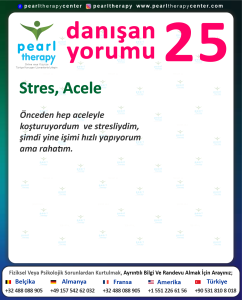
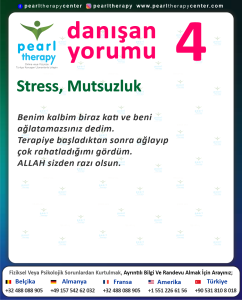
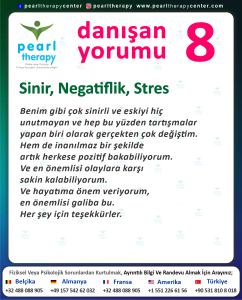
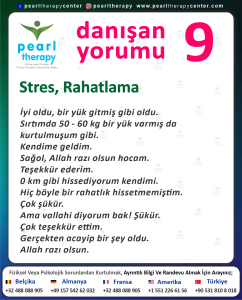
Client Comments
At Pearl Therapy, you can review the anonymous, permissioned experiences of clients who have received therapy for various issues on our full client testimonials page.
How does the subconscious stress cycle work?
The stress response often begins without conscious decision. The subconscious associates a word, facial expression, task, uncertainty, or bodily sensation with a past danger; the brain and body automatically go on alert to protect the person.
The cycle intensifies when the alarm itself is again perceived as frightening. The person interprets their palpitations, tension, or mental exhaustion as "I can't take it"; avoidance, procrastination, overwork, or anger may provide short-term relief but reinforce the connection in the long term.
1. Trigger
A task, person, promise, expectation, financial matter, relationship, or uncertainty can trigger an old record.
2. Subliminal Danger Interpretation
The system codes the event as "I will fail," "I will be rejected," "I will lose control," or "I will suffer damage."
3. Body Alert
Heart rate, breathing, muscle tension, attention, and energy levels change in a way that prepares for danger.
4. Automatic Thoughts
Thoughts like "I won't make it," "Everything will be bad," and "I can't handle this" only raise the alarm even further.
5. Automated Behavior
Avoidance, procrastination, controlling behavior, trying to keep up with everyone, anger, or short-term comforting behaviors come into play.
6. Temporary Relief
Although escaping from a threat may feel good in the short term, the subconscious can learn the association, "I am safe because I escaped."
7. Strengthened Record Keeping
A similar event triggers an alarm more quickly the next time; the stress threshold decreases and the field of vision expands.
8. Fatigue and Burnout
Constant stimulation reduces sleep, attention, motivation, relationships, and physical comfort.
9. Changing the Loop with HMT
As the master records are deciphered, the trigger no longer carries the same meaning of danger; the thought, body, and behavior system are reorganized.
What happens in the brain and body during stress?
When the brain perceives a situation as a threat, it prepares the body for rapid action via the hypothalamus and autonomic nervous system. With the activation of the sympathetic nervous system and the role of stress hormones like adrenaline and cortisol, attention is directed towards the danger; heart rate, breathing, muscles, energy expenditure, and digestion may temporarily change.
The system is expected to return to a resting state once a real threat has passed. However, when the subconscious alarm recording remains constantly active, even everyday stimuli such as work, messages, criticism, or thoughts can repeatedly trigger the same preparatory response.
The Beginning of Threat Perception
The brain quickly evaluates external events or internal thoughts; the subconscious can make a decision about danger based on past records.
Sympathetic
The body prepares to fight, flee, or freeze; arousal can automatically increase even if the person doesn't want it to.
Adrenaline and Cortisol
Biological processes that divert energy and attention to the danger in the short term come into play; their failure to shut down for extended periods can be debilitating.
Heart and Breath
Heart rate and respiratory rate may change; fear and tension can increase when the person interprets this as dangerous.
Muscles and Posture
The jaw, neck, shoulders, and back may tense up for protection; prolonged tension can reduce daily comfort.
Digestion and Appetite
When the body redirects energy to an emergency, gastrointestinal movements, appetite, and food preferences can vary from person to person.
Attention and Memory
When the mind is fixated on a threat, it can become difficult to think broadly, learn, remember, and generate options.
Return to Rest System
When the danger has passed, the body needs to calm down; sleep, security, breathing, and a healthy lifestyle routine can strengthen this transition.
Changing the Main Command with HMT
Therapy doesn't blame the bodily reaction; it works on the individual's specific underlying threat connection that unnecessarily triggers that reaction.
In what forms can stress be experienced?
The duration, source, and cyclical nature of stress can vary from person to person. A therapy plan is not simply prepared by stating "there is stress," but by identifying where the stress begins, when it intensifies, and which internal need it sustains.
Acute Stress
A brief period of heightened alert may occur following an unexpected event, argument, exam, presentation, or sudden danger.
Recurrent Acute Stress
The constant rush, crisis, last-minute planning, and inability to keep up can increase the frequency of short-term stress attacks.
Chronic Stress
Months of work, relationship stress, financial problems, caregiving responsibilities, or inner pressure can prevent your body and mind from resting.
Work and Performance Stress
Heavy workloads, fear of making mistakes, workplace bullying, uncertain tasks, and the equation of success with self-worth can create constant tension.
Family and Relationship Stress
Communication conflicts, boundary issues, caregiving responsibilities, parenting, and separation anxiety can all contribute to the alarm not turning off at home.
Financial Stress
Debt, income uncertainty, fear of job loss, and a history of deprivation can make the future seem like a constant threat.
Social and Digital Stress
Constant notifications, comparisons, news tracking, online accessibility, and the need for social validation can create a mental burden.
Post-Traumatic Alarm
Reminders of a traumatic past event can cause the body to react strongly today, even if the danger has passed.
Internal Stress
Even when there are no major external problems, perfectionism, guilt, control, feelings of worthlessness, and catastrophic thoughts can perpetuate internal pressure.
Which areas of life are affected by prolonged stress?
Chronic stress isn't just about feeling tense. When the alarm system runs for an extended period, thoughts, emotions, behaviors, sleep, body, relationships, and work routines can all influence each other in a vicious cycle.
Sleep and Energy
Not shutting down the mind at night and having superficial sleep can lead to daytime fatigue, listlessness, and a lower stress threshold.
Attention and Memory
When the mind is constantly scanning for threats, learning, decision-making, planning, and remembering can become difficult.
Emotional Balance
Anxiety, anger, hopelessness, guilt, loneliness, and feelings of loss of control may increase.
Muscles and Bodily Comfort
Maintaining a protective posture for extended periods can create tension in the jaw, neck, shoulders, back, and head.
Digestion and Appetite
Changes in appetite (decreased or increased), rapid eating, cravings for sweets, and gastrointestinal complaints can occur during stressful periods.
Relationships
Intolerance, withdrawal, constant criticism, or an inability to share burdens can create distance in close relationships.
Work and Education
Fear of making mistakes, procrastination, overworking, and distractibility can reduce performance and self-confidence.
Relaxation Behaviors
Turning to food, screens, shopping, gambling, smoking, alcohol, or other behaviors can become a means of providing temporary relief.
Enjoying Life
When a person is constantly thinking about the next problem, it can become difficult to relax, enjoy themselves, connect with others, and stay in the moment.
How Does Pearl Therapy HMT Address Stress at its Root?
Breathing exercises, walking, resting, or drinking herbal tea can be relaxing in the moment when trying to cope with stress. However, if subconscious threats, perfectionism, feelings of worthlessness, boundary issues, or past trauma remain unchanged, the same cycle can restart with a new trigger.
In Holistic Master Therapy, a single method is not applied to the individual. After identifying the root causes, appropriate subconscious, psychological, behavioral, physical, familial, environmental, traditional, ancient, and modern knowledge is brought together; change is then monitored within real-life contexts.
Subliminal Records
Previous records are identified that interpret today's events as danger, inadequacy, rejection, or loss of control.
Traumatic Emotional Burdens
The effects of fear, anger, helplessness, and guilt that past events link to present triggers are resolved.
Automatic Thought System
Catastrophizing, mind reading, the need to please everyone, and the compulsion to be perfect are all redefined.
Body Alert
The underlying subconscious commands behind muscle tension, rapid breathing, palpitations, and the fight-or-flight response are examined.
Behavioral Cycles
Healthy alternatives are established to replace avoidance, procrastination, overworking, controlling, and short-term comforting behaviors.
Border and Relationship System
The ability to say no, share burdens, communicate openly, ask for help, and protect one's own space is strengthened.
Sleep and Lifestyle
Daily routines, the connections between screens, rest, movement, work, and sleep patterns that perpetuate stress, are tailored to the individual.
Family and Environment
Roles, expectations, communication styles, and triggers that create constant alarm in home, work, and social environments are evaluated together.
Ancient and Modern Knowledge
Traditional and ancient knowledge, modern scientific studies, and subconscious methods are combined in a single 360-degree system tailored to the individual.
Personalized Method Selection
Methods such as hypnosis, EFT, EMDR, regression, breathwork, Sedona, and imagination are not suitable for everyone; the appropriate method is chosen according to the underlying cause.
Follow-up and Strengthening
Real-life reactions are observed between sessions, tasks are assigned if necessary, and the new system is reinforced to ensure it becomes permanent.
360 Degree Internal Balance
The goal is not just to reduce a single symptom; it's to create a strong, holistic approach where the person no longer needs to be overly alarmed by the same problem.
HMT's healing philosophy: First, the root causes that create and sustain stress are identified. Then, personalized methods are applied to change these causes; changes in thoughts, feelings, body, behavior, relationships, and life patterns are monitored and reinforced.
Scientific Research on the Fields of Study of Stress and HMT
Scientific research shows that stress is not just a single thought; it is linked to the body, sleep, work, relationships, behavior, and lifestyle. The following studies explain why HMT provides a 360-degree assessment of the individual; the results do not guarantee or definitively constitute a session plan for any single person.
WHO: Stress Affects Both Mind and Body
The World Health Organization defines stress as a state of anxiety or mental tension caused by a difficult situation. Excessive stress can be associated with headaches, body aches, stomach problems, changes in sleep and appetite, difficulty concentrating, and irritability. This information sheet is a general health framework and not a clinical trial. Please review the WHO stress fact sheet.
APA 2025 Survey: 3.199 Adults
In an online survey of 3.199 adults in the U.S. conducted between August 4–24, 2025, 62% of participants reported social division as a significant source of stress. 54% reported feeling lonely, and 50% reported experiencing exclusion or a lack of companionship. The sample was weighted to represent U.S. adults; it cannot be directly generalized to the global population. Read the APA Stress in America 2025 report.
EU-OSHA: 27% of employees
In the European Agency for Occupational Safety and Health (EU-OSHA) 2022 OSH Pulse survey, 27% of workers reported experiencing work-induced or exacerbated stress, anxiety, or depression. This result is based on self-reporting and European workplace conditions; it is not an individual diagnosis rate. See the EU-OSHA psychosocial risks page.
WHO and ILO: Long Working Hours
WHO and ILO estimates reported that working 55 hours or more per week was associated with approximately 745.000 deaths from stroke and ischemic heart disease in 2016. Compared to those working 35–40 hours per week, the risk of stroke was 35% higher and the risk of death from ischemic heart disease was 17% higher. These are population-level models; they do not determine the risk for an individual. Read the WHO–ILO statement.
Breathing Exercises: 12 RCTs and 785 Adults
A meta-analysis combining 12 randomized controlled trials and 785 adults found that breathwork had a small-to-moderate effect on self-reported stress. The risk of bias was moderate in most studies, and the methodologies varied; therefore, breathwork alone cannot be considered to have solved the root cause of every stressor. Review the meta-analysis summary.
Short Mindfulness Practices: 65 RCTs
A meta-analysis of 65 randomized studies involving a total of 5.489 participants found that brief mindfulness practices had a small effect on negative emotion. The effect was significantly reduced after adjusting for publication bias; the samples were mostly composed of young and inexperienced participants. Read the study summary.
Digital Awareness RCT: 163 Participants
In a study of 163 adults experiencing moderate-to-high stress, divided into five groups, two mindfulness programs showed better results than control conditions in terms of perceived stress, sleep disturbances, and physiological response to laboratory stress. No significant differences were found between groups on the mindfulness scale; results are specific to the digital program and short-term sampling. Review the randomized study.
Individual Interventions in the Workplace: 49 RCTs
A meta-analysis of 49 randomized studies examining individually focused interventions in healthy workers showed the greatest average effect on perceived stress. The effects of relaxation, cognitive, and multi-component programs varied; no significant results were found in some subdimensions of absenteeism and burnout. Read the meta-analysis of workplace interventions.
Digital Mental Health in the Workplace: 50 Studies
A systematic review evaluating fifty studies and a meta-analysis of 34 studies reported moderate effects of digital workplace applications on stress, insomnia, and burnout. Researchers emphasized the need for further studies on variables explaining who benefits most from which application. See the systematic review.
Muscle Relaxation: 31 RCTs and 2.277 Participants
A meta-analysis of 2026 studies combining 31 randomized trials and 2.277 participants reported that progressive muscle relaxation was associated with improvements in sleep, anxiety, and quality of life outcomes. The difference between studies was very high; therefore, the average effect does not guarantee an individualized result. Read the meta-analysis summary.
The common message of research regarding HMT is: Stress is not a one-dimensional problem that can be explained simply by saying "relax." Sleep, body, working conditions, loneliness, breathing, thoughts, behavior, and environment all play a role. Pearl Therapy HMT combines this modern scientific knowledge with the subconscious root, emotions, family, relationships, and life patterns to create a personalized system.
Holistic Master Therapy Process for Stress and Tension
Therapy is not limited to simply having the person describe the events of that week. The initial onset of stress, the situations in which it escalates today, how it affects the body, the thoughts and behaviors that sustain it, and the impact of family and work environments are all evaluated together.
Each client has a different underlying cause and pace of change. Therefore, the method, session duration, and progress plan are not determined by rote; they are tailored to the individual based on the underlying issues identified during the initial assessment and their real-life needs.
1. Detailed Initial Session and Identification of the Root Cause
Through preliminary assessment forms and interviews, the history of stress, its triggers, bodily reactions, thoughts, behaviors, sleep, relationships, and living conditions are examined. In the first session, the root causes of the problem are identified , and a personalized roadmap is prepared.
2. Trigger and Alarm Map
It is determined which person, word, task, environment, uncertainty, or bodily sensation triggered the alarm; and how the response amplified.
3. Unraveling the Root Causes of the Subconscious
Past traumas, feelings of worthlessness, perfectionism, control, rejection, and insecurity are addressed using methods tailored to the individual.
4. Reconfiguring the Body Alarm
The automatic link between the trigger and the fight-or-flight response—whether it's muscle contraction, rapid breathing, flight, or freezing—is altered.
5. Changing Automatic Thoughts
Instead of catastrophic scenarios, fear of failure, mental repetition, and excessive responsibility, a realistic, clear, and powerful thought process is established.
6. The New System of Emotions and Behaviors
Procrastination, avoidance, anger, overwork, or short-term relief behaviors are replaced with boundaries, planning, rest, and healthy response skills.
7. Strengthening Family, Relationship, and Work Structure
Burden sharing, open communication, roles and boundaries, work style, and environmental triggers are aligned with the individual's inner transformation.
8. Regulating Sleep and Daily Life
Pre-sleep arousal, screen time, work-life balance, exercise, and daily rhythm are all reinforced in a way that suits the individual.
9. Follow-up and Sustained Strengthening
New situations arising in real life are evaluated; internal and external arrangements are strengthened to reduce the risk of returning to the old cycle.
What methods are used in the sessions? Hypnosis, EFT, EMDR, regression, breathwork, Sedona, and imagination are some of the methods that can be considered within HMT. However, there is no fixed protocol that applies to everyone; the choice of method is made according to the client's main reason, suitability, and personal plan.
Changes Targeted by Therapy
Change isn't simply about feeling comfortable for a few more days. The goal is to strengthen thoughts, feelings, body, behavior, relationships, and daily life as the root causes of stress are addressed.
Inner Peace
The goal is for the mind and body to act when necessary and then rebalance themselves, rather than remaining constantly on alert.
Stronger Emotion Regulation
The process of recognizing and healthily expressing anxiety, anger, fear, and helplessness before they accumulate is strengthened.
Relaxed Body
The alarm associations underlying the muscle tension, shallow breathing, and constant defensive posture that occur with stress are reduced.
Clear Thinking and Focus
As mental noise decreases, prioritizing, making decisions, remembering, and completing tasks becomes easier.
Healthy Boundaries
The individual is encouraged to say no, share the burden, ask for help, and manage their own time.
Balanced Work System
Instead of the cycle between procrastination and overwork, a realistic balance of planning, breaks, responsibilities, and rest is established.
Strengthening Relationships
Instead of irritability, withdrawal, and blame, open communication, understanding, and mutual burden sharing increase.
Sleep and Daily Energy
As the thoughts and habits that keep the nightly alarm going are reformed, rest and daytime energy are strengthened.
Regaining Control of Your Life
Even when external circumstances are variable, a person can more effectively manage their own reactions, decisions, and life direction.
How can you approach someone you know who is experiencing intense stress?
Saying things like "Relax," "You're making a big deal out of it," or "Everyone has problems" can make someone feel misunderstood. Acknowledging that stress might stem not from a seemingly minor event on the outside, but from a powerful alarm system operating within a person's internal system, changes communication.
Listen without accusation.
Before offering immediate solutions, ask what's bothering them the most, how they're feeling physically, and what kind of support they need.
Talk about the tangible effects.
Share your observations about changes in sleep, anger, fatigue, relationships, and work, without saying "You are like this."
Truly Share the Burden
Instead of simply saying "I'll help," work together to identify specific responsibilities that can be undertaken and sustainably take them on.
Make the First Session Easier
Be there to assist with scheduling appointments, scheduling suitable times, or preparing for the meeting; leave the decision and privacy to the individual.
Set Healthy Boundaries
State calmly and clearly that stress does not give you the right to be angry, say hurtful things, or shift all the blame onto others.
Learn the Way for Yourself, Too
Even if your loved one doesn't yet want therapy, you can still schedule sessions to learn about effective communication, boundary setting, and support approaches.
You can take the first step today for yourself or a loved one. The goal isn't to force the person; it's to facilitate a safe and workable path to change before the problem escalates.
Online and In-Person Stress Therapy
Stress and tension management sessions can be conducted in person at our centers or online via video call, depending on the client's suitability, preferences, and goals. Online sessions also involve a detailed assessment, identification of the underlying cause, exploration of subconscious connections, and a comprehensive examination of emotions, thoughts, behaviors, and lifestyle patterns.
Face-to-Face Session
Direct therapy with a therapist in a central setting is suitable for clients who desire a private and structured therapy environment.
Online Session
Clients who are unable to come to the center due to their country of residence, distance, work schedule, or family responsibilities can participate via video call.
Same Holistic Assessment
Although the interview format may vary, the stress cycle, root causes, real-life triggers, and change plan are addressed holistically.
Flexible Transition
Depending on availability and need, some sessions may be scheduled online and others in person during the process.
Private Meeting Area
When participating online, it's important for the client to choose a private space where they won't be interrupted, can speak comfortably, and where the connection is convenient.
International Participation
Clients residing in different countries can contact customer service to arrange appointments that accommodate time differences.
Who is Stress and Tension Therapy Suitable For?
You don't need to wait for stress to completely halt your life to start therapy. Whether the problem is new or has been ongoing for years, the individual's specific underlying causes and needs are assessed during the initial session.
Those Who Are Constantly on Alert
People who can't relax even when they rest, who live as if a new problem could arise at any moment.
People Experiencing Workplace Pressure
Those experiencing heavy responsibility, fear of making mistakes, workplace bullying, inability to keep up, or work-life imbalance.
Perfectionists
People who can't accept making mistakes, feel inadequate at the slightest shortcoming, and constantly push themselves too hard.
Those Experiencing Sleep and Mental Fatigue
Those who can't stop thinking at night, wake up tired in the morning, and have difficulty concentrating during the day.
People Experiencing Family and Relationship Stress
Those who are constantly stressed due to communication conflicts, caregiving burden, boundary issues, or fear of separation.
Those with Financial and Future Concerns
Those whose alarm doesn't go off due to uncertainty, debt, fear of job loss, or past experiences of deprivation.
Those who feel stress in their bodies
People who experience muscle tension, headaches, stomach upset, changes in appetite, breathing, or energy levels during stressful periods.
Those Who Develop Escape Behaviors
Those who turn to short-term relief through eating, screen time, shopping, smoking, alcohol, or other behaviors.
Those Seeking Support for a Loved One
Those whose spouse, child, parent, or other loved one is experiencing intense stress and wants to learn the right approach.
Personalized and confidential work for each client.
The same workload or family problem can produce different results for two people. Therefore, instead of ready-made phrases and assigning the same tasks to everyone, Pearl Therapy focuses on the individual's background, values, life circumstances, strengths, and true goals.
Personalized Root Cause Map
The true subconscious, emotional, behavioral, and environmental connections behind the apparent trigger are identified.
Non-judgmental Approach
Procrastination, anger, avoidance, or relief behaviors are studied not as character flaws, but as learned solutions from the system.
Female and Male Therapist Options
In one-on-one sessions, female clients can be scheduled with a female therapist, and male clients with a male therapist.
Privacy and Privacy
The client's personal issues, therapy goals, and life details are discussed within the framework of a private consultation.
Realistic Roadmap
The main areas of focus are identified during the initial assessment; guaranteed results are not given to anyone, nor is the same number of sessions provided to everyone.
Client Participation
Providing accurate information, attending sessions regularly, and implementing the assigned small exercises strengthens the change process.
Why Pearl Therapy for Stress Therapy?
Pearl Therapy differs in that it doesn't view stress simply as a matter of daily pressure or thought. The underlying subconscious roots—emotions, body, behavior, family, work, social environment, sleep, and lifestyle—are addressed within a single, personalized HMT system.
Subconscious Root Focused
Instead of temporarily suppressing the symptom, the core recordings that generate and sustain the alarm are identified.
Holistic Master Therapy
The subconscious, psychological, behavioral, physical, familial, and environmental aspects are all addressed within a single holistic process.
360 Degree Approach
The ways in which stress feeds off each other in work, relationships, sleep, the body, and daily behavior are evaluated together.
Ancient and Modern Knowledge
Appropriate traditional and ancient knowledge, modern scientific studies, and subconscious methods are used together.
Personalized Plan
The same method, assignments, or number of sessions are not applied to everyone; the process is tailored to the actual root causes.
Detailed Initial Interview
Instead of a brief and superficial conversation, forms and interviews are used to identify the root causes of the problem cycle.
Online and In-person
Clients can receive therapy in person at our centers or online via video call, provided the conditions are suitable.
Female and Male Therapists
One-on-one sessions can be scheduled between female and male therapists, respectively.
Private and Non-Judgmental
Without blaming the individual for their struggles, the needs and connections underlying the behavior are understood.
Changes being monitored
The new system developed during the sessions is monitored for performance in real-world situations and strengthened as needed.
How many sessions does stress therapy last?
The duration of therapy is affected by factors such as the length of time the stress has been experienced, the number of root causes, traumatic experiences, family and work conditions, sleep, co-occurring behaviors, and the client's participation in therapy. Therefore, it is not accurate to tell everyone the same number of sessions.
History of the Problem
A single, newly initiated cycle of chronic stress that has spanned many areas for years does not follow the same pattern.
Depth of Main Roots
A single trigger can be linked to multiple traumas, beliefs, relationships, and behaviors.
Living Conditions
The changeable aspects of work, caregiving, relationship, or financial conditions that perpetuate stress are addressed through therapy.
Regular Participation
Attending sessions regularly, providing accurate information, and completing the assigned short exercises will reinforce progress.
First Evaluation
In the first session, the main causes and areas of focus are identified; the appropriate path to change for the client is explained.
Personalized Tracking Instead of Warranty
No definite outcome or fixed timeframe is given for everyone; change is monitored through real-life reactions.
Frequently Asked Questions About Stress and Tension Therapy
Is it possible to get rid of stress and tension?
Yes, the problem cycle can be powerfully altered when the individual root causes that create and sustain stress are identified and changed. The goal is not to eliminate all of life's demands, but to establish a calm and balanced internal system that doesn't generate excessive alarm under the same conditions.
Why can't I relax on my own?
Because the stress response doesn't start with rational thought alone; the subconscious and body often go on alert before you even decide to. Saying "I need to relax" can restart the cycle even if it provides temporary relief, unless it changes the core patterns.
How does Pearl Therapy work in stress therapy?
Subconscious patterns, traumas, automatic thoughts, bodily reactions, behaviors, relationships, work and life routines that perpetuate stress are evaluated together. Based on the root causes, a personalized HMT plan is created, and change is monitored in real life.
What does the subconscious root cause mean?
It is past records and learned associations that interpret a present event as danger, failure, rejection, or loss of control. The trigger is the apparent cause; the root cause explains why that trigger creates such a strong alarm in the individual.
What happens during the first session?
Through preliminary assessment forms and a detailed interview, the history of stress, its triggers, emotions, thoughts, body, behavior, relationships, work, sleep, and living conditions are examined together. In the first session, the root causes of the problem are identified , and the initial steps of a personalized path to change are determined.
What methods are used in the sessions?
Not everyone is suited to the same method. Depending on the individual's underlying causes and suitability, subconscious techniques such as Hypnosis, EFT, EMDR, Regression, Breathwork, Sedona, and Imagination can be combined within HMT using psychological, behavioral, familial, environmental, ancient, and modern approaches.
Is online stress therapy available?
Yes, for suitable clients, detailed assessment and therapy can be conducted online via video call. It is important for the client to create an environment where they can speak uninterrupted, privately, and comfortably.
How many sessions does stress therapy take?
The duration varies depending on the history of stress, the number of root causes, life circumstances, and client participation. The main areas of focus are identified in the first session; the same number or definite outcome is not given to everyone.
What can I do if someone I know doesn't want therapy?
Instead of blaming or pressuring, calmly discuss the concrete effects they are experiencing and offer an initial consultation as an easy option. If your loved one isn't ready, you can schedule a consultation yourself to learn about effective communication, boundaries, and support approaches.
What to do if stress levels rise again?
A new life event can trigger a previously unexplored root cause or an old behavioral link. The situation is assessed early, the connection between the new trigger and the underlying cause is explored, and the established strong system is reinforced.
Other Related Pearl Therapy Pages
To explore the effects of stress on the subconscious, anxiety, anger, attention, family, and life in more detail, you can use the Pearl Therapy pages below.
Subconscious-Based Holistic Master Therapy
Therapy for Psychological and Mental Health Problems
Family, Relationship and Marriage Counseling
Anxiety Disorder and Anxiety Therapy
Anger Management Therapy
Concentration and Attention Deficit Therapy
The Effects of Stress on the Brain
Pearl Therapy Client Testimonials
First Session Appointment with Extra Discount
Online Stress Therapy Service Areas
Pearl Therapy's online stress and tension therapy services, offered via video call when appropriate, are accessible from anywhere in the world. Clients residing in Belgium, the Netherlands, Germany, France, Austria, Switzerland, the United Kingdom, the United States, Canada, Australia, Turkey, and other countries can contact us to schedule appointments that accommodate time differences.
Frequently Searched Terms on This Topic
How is stress and tension treated?
What is subconscious stress therapy?
How can I get rid of chronic stress?
Work stress and burnout therapy
The main subconscious causes of stress.
Reasons for constantly feeling tense
Sleep problems caused by stress
Stress and muscle tension therapy
How to resolve family and relationship stress?
Perfectionism and stress therapy.
Online stress therapy
Face-to-face stress therapy
How can you help a loved one who is experiencing stress?
Holistic Master Therapy for Stress
Therapy for mental fatigue and tension.
Offer:
For yourself or a loved one
Stress and Tension Therapy
first session appointment
for a while Extra Discount You can create.
Therapist Right for You:
In one-on-one sessions
💗♀ Women to women clients,
💙♂ Male clients with male therapists
A private and non-judgmental meeting can be planned.
Don't delay change:
With Holistic Master Therapy
Subconscious, emotional, behavioral, and environmental factors that perpetuate stress.
to identify the root causes and initiate a holistic solution process
📌 in person or 🌐 online
You can take the first step today.
Start your journey of calm, balanced, and powerful change by scheduling your first session.
What is Stress?
Stress , or tension in Turkish, is a reaction the body gives when under pressure.
Stress can be short-lived and beneficial for us; it improves the body's responses.
Ongoing and unending chronic stress is detrimental to health in the long run.
Causes and Symptoms of Stress;
Many factors such as events, lifestyle, approach to events, and nutrition can cause stress.
Common causes of stress include work pressure, family problems, financial difficulties and major life changes.
Stress/tension problem is healed with holistic subconscious therapy
If not treated correctly depending on the degree of stress, it can become chronic over time or cause various physical and psychological problems!
Stress problem seriously reduces the quality of life of both the person experiencing this stress and those around him!
HOW TO PASS STRESS
There are many methods to reduce the stress that occurs; the right herbal teas, breathing exercises, walking in nature, sports and so on.
But these do not remove the main causes of stress.
Preventing stress by identifying the main psychological, subconscious, behavioral and physical sources of stress and clearing them is a much easier method than trying to reduce the stress that constantly occurs.
At Pearl Therapy, your stress is relieved and your stress sources are cleared with subconscious-based Holistic Master Therapy (HMT).
From stress,
If you prefer, face-to-face sessions at our centers in Europe, America or Türkiye,
If you want, you can also get away with online sessions by making a video call.
Pearl Therapy's Turkish-speaking male and female experts
to help you relieve stress;
Make an appointment now for a discounted initial consultation lasting 2 sessions.
Physical Symptoms of Stress:
- Muscle tension
- Headaches
- Sleeping disorders
- Stomach disorders
Emotional Symptoms of Stress:
- Anxiety
- Irritability
- loss of motivation
- Intense thoughts and restlessness