

First a brief summary, then all the details.
The benefits of barley.
From one
much more.
Barley is a grain that adds value to the table with its soluble fiber called beta-glucan, vitamins, and minerals . Its most researched benefits are related to post-meal blood sugar response and LDL cholesterol. Its role in regulating bowel movements, promoting satiety, and its place in ancient cuisine also make barley noteworthy.
Blood sugar response
Beta-glucan can help mitigate post-meal glucose spikes by forming a gel-like consistency during digestion.
LDL cholesterol
An analysis of 14 studies involving 615 people found that barley beta-glucan lowered LDL levels by approximately 10 mg/dL on average.
Bowel regularity
Fiber supports stool volume and fermentation in the intestine. Its effects on the microbiota have also been studied in human research.
feeling of fullness
Some short-term studies have shown increased satiety and lower energy intake at the next meal.
Fiber, vitamins and minerals
100 g of dry whole barley contains 17,3 g of fiber . Vitamins B1 and B3, magnesium, manganese, and selenium are its prominent components.
The students of ancient tables
Talbîne, prepared from barley flour, is mentioned in hadiths as a remedy for the sick and sorrowful. Ibn Sina and Hippocratic texts also mention various uses of barley.
Nutritional values are for 100 g of raw, dried, bran-retained barley. Details of the products and participants in the studies are given below.
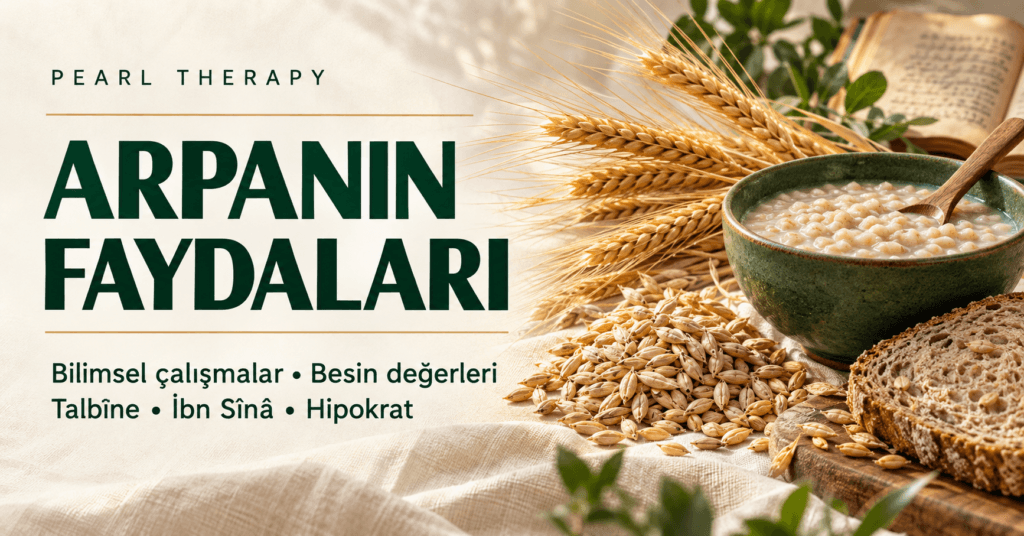
From ancient cuisine to today's research
Let's get to know barley better.
Blood sugar, soluble fiber, vitamins and minerals… A comprehensive guide ranging from barley bread to talbinah; from scientific research to the accounts of the Prophet Muhammad ﷺ, Ibn Sina and Hippocrates.
If you're concerned about your blood sugar, question not only your sweets, but also your bread.
Would you like a personalized roadmap for your health?
Learn about our Holistic Master Therapy and health counseling options at Pearl Therapy; let's schedule your initial consultation.
HORDEUM VULGARE
A GRAIN · A STORY OF THOUSANDS OF YEARS
In 100 g of raw, dried, whole-grain barley.
Measured recipe containing 75% grains + 25% flour.
In 20 healthy adults, at their next breakfast.
615 participants · barley beta-glucan and LDL.
PEARL THERAPY · THE FIRST STEP FOR YOURSELF
Let us be there to support you in incorporating knowledge into your life.
Want to change your diet but don't know where to start? Explore personalized support options that can address your daily habits, stress levels, and health goals together. At Pearl Therapy, take the first step towards a consultation tailored to your needs by learning about Holistic Master Therapy, health coaching, health counseling, and traditional medicine consultations.
You can inquire about online or in-person consultation options, and together with our customer service team, determine the service that best suits your needs.
01 / What makes a grain special
Why is barley attracting attention?
Barley's strength isn't just that it's "whole grain." The real difference lies in beta-glucan , a soluble fiber , and the integrity of the grain.
If you're concerned about your blood sugar, make peace with barley starting today. Whole-grain barley can be a great alternative to white bread, a filling soup, or a soft talbîne (a type of Turkish flatbread).
How does beta-glucan work?
Beta-glucan, which can form a gel-like consistency and viscosity during digestion, helps slow the digestion of carbohydrates and the absorption of glucose. Therefore, it stands out in research on postprandial blood sugar response.
EFSA's established post-meal glycemic response criterion is based on 4 g of oat or barley beta-glucan for every 30 g of available carbohydrates in a meal. The 2025 assessment did not support reducing the amount to 2 g.
Source: 2025 · EFSA, beta-glucan and post-meal glycemic response
The difference compared to whole wheat.
Whole wheat is also a valuable grain. In the barley samples studied in the talk, the amount of beta-glucan was found to be approximately 10 times higher than in wheat . This is a comparison of the varieties examined.
The difference compared to white flour
Whole barley, with its bran and germ preserved, provides more fiber and various minerals than refined grain products. It also offers an advantage in some B vitamins compared to unenriched white flour.
Source: 2024 · Comparison of beta-glucans in grains; 2023 in DOI · USDA MyPlate · Whole and refined grains
The intestines and satiety.
Barley fiber can be fermented by gut bacteria. Its fibrous structure can contribute to improved bowel function and a feeling of fullness. The amount of resistant starch varies depending on the variety and preparation method.
Source: 2015 · Three-day barley bread study
| Component | Key feature |
|---|---|
| Arabinoxylan | One of the important fibers in the cell wall of grains. |
| Ferulic acid | A phenolic acid whose antioxidant properties are being investigated. |
| p-Coumaric acid | A type of phenolic acid. |
| Tokoller | Tocopherols and tocotrienols, from the vitamin E family. |
| Resistant starch | The portion of starch that is not completely digested in the small intestine and can be fermented there. |
A single fixed 100g quantity is not given for these components; it varies depending on the type and processing. Previous notes do not contain separate source links for each component.
02 / Comparative data
Glycemic index of barley and bread.
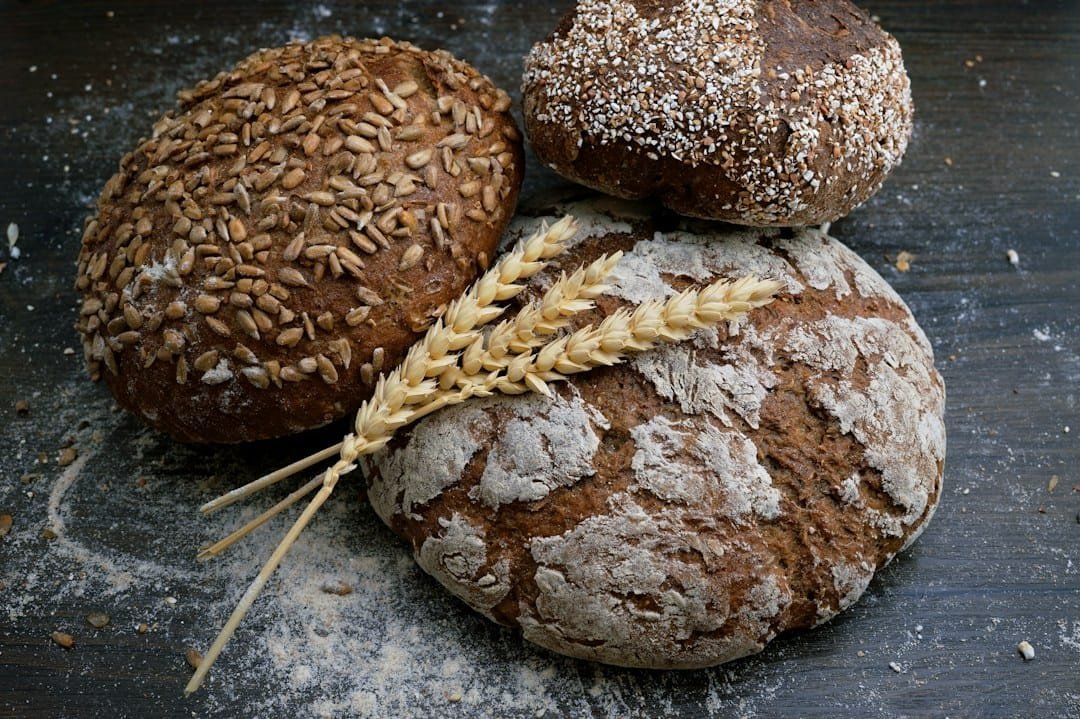
The glycemic index (GI) compares the blood sugar response to a food containing an equal amount of available carbohydrates to a reference glucose level. Reference: glucose = 100.
A low GI generally indicates a lower post-meal glucose response. It reflects not only the rate of increase but also the total response over the measurement period.
Like drinking water from a bucket.
In the previous post, a high GI was likened to someone who is thirsty quickly consuming water: "The water runs out quickly, and you get thirsty again soon." This is a simple analogy that describes a rapid rise in GI.
Like drinking sip by sip
Low GI was likened to drinking water more slowly: "The water doesn't run out immediately, it gets what it needs." The aim is to visualize a more balanced meal response.
GI comparison of two breads in the same study.
Source: Glycemic index database · University of Sydney
| Product / Recipe | GI | Measurement context |
|---|---|---|
| Boiled barley grains | 25, 35 and 38 | Various preparation and measurement records. |
| 75% barley grains + 25% barley flour bread | 28 | Specific recipe; 1988 record, 5 participants with type 2 diabetes. |
| Specialty bread containing high-fiber barley flour. | 43 | 80% high fiber + 20% regular barley flour. |
| Flatbread made with white flour in the same record | 80 | The same study comparison with a value of 43. |
| 50% barley flour bread | 59,16 ≈ 59 | 2020 study; 10 healthy individuals. |
| White bread in the same study | 91,98 ≈ 92 | The same study comparison with a value of 59,16. |
| A bread made only with barley flour. | 68 | The specific recipe in the database is for 6 people. |
Source: Glycemic index database · University of Sydney · 1996 · High-fiber barley bread study · 1988 · Addition of grains to bread and glycemic response · 2020 · Comparison of 50% barley bread and white bread · 1992 · Preparation of barley products and glycemic response
Grain, flour, and bread are not the same thing.
Maintaining the grain's structure, degree of milling, barley type, recipe, and baking method all affect the result. The outcome of bread made with finely milled flour may differ from that of bread made with boiled whole grains. Portion size is also important in terms of total blood sugar effect.
There is no single fixed GI for 100% barley bread. Barley flour bread is also included in the database with a value of 68. It is more meaningful to look at the percentage of barley, whole grain content, and preparation method of the product instead of just the word "barley".
General GI ranges mentioned in the speech.
| Phrase | Transferred value |
|---|---|
| White flour bread / flatbread | 80–90 |
| High-fiber whole barley/bran barley bread | 35–45 |
| Previous general range for barley | 25–40 |
| Another range for boiled barley grains. | 35–38 |
These ranges are a record of the previous texts. The table above also provides the measured values and descriptions for specific products.
For a broader understanding of the topic, you can review our guide on diabetes, type 2 diabetes, and insulin resistance.
03 / Conclusion and context
What do scientific studies show?
The results of a study gain meaning when we consider the product used, the participants, and what was measured all together.
Barley bread and the next breakfast
Following a three-day period of consuming barley bread, a standard breakfast was compared to a period of consuming white bread. Overall post-meal responses were found to be lower.
These are not single blood glucose measurements or HbA1c changes, but rather the cumulative response differences following the next meal. The study is noteworthy for its "next meal effect."
Barley beta-glucan and LDL cholesterol
In the meta-analysis, barley beta-glucan reduced LDL cholesterol by an average of 0,25 mmol/L compared to control diets . This is approximately 9,7 mg/dL ; previously reported as rounded to 10 mg/dL.
In the analysis, the median amount of beta-glucan was 6,5 g daily, and the median duration was 4 weeks. EFSA's recommended daily intake of 3 g of beta-glucan for cholesterol is not the same as the median dose in this meta-analysis.
Source: 2016 · Meta-analysis of 14 studies on beta-glucan and blood lipids · Same meta-analysis · Europe PMC · EFSA · Barley beta-glucan and cholesterol
In the same analysis, the change in ApoB levels was not found to be statistically significant.
Comparison of 50% barley flour bread
The measured GI was 59,16 for barley bread and 91,98 for white bread . Approximately 36% lower GI was found in the same study.
Source: 2020 · Comparison of 50% barley bread and white bread
Richer in beta-glucans compared to wheat.
The barley varieties used in the grain research discussed had beta-glucan levels ranging from 3,14–5,85 g/100 g ; approximately 10 times higher than in wheat. The article was published on January 9, 2024; the DOI and volume information lists 2023. Barley's distinguishing feature isn't its superiority in every vitamin or mineral, but rather its richness in this particular fiber.
Source: 2024 · Comparison of beta-glucans in cereals; DOI 2023
Cholesterol and post-meal glucose: two different quantities.
| Topic | Amount used at the source |
|---|---|
| Blood cholesterol | At least 3 g of barley beta-glucan daily. |
| Post-meal glycemic response | 4 g of barley/oat beta-glucan for every 30 g of available carbohydrates in the meal. |
These amounts refer to the amount of beta-glucan in the barley, not its total weight . The 2025 EFSA review did not support reducing the amount to 2 g for better glycemic response.
Source: 2025 · EFSA, beta-glucan and postprandial glycemic response · EFSA · Barley beta-glucan and cholesterol
2025 · Dysuria after barley water and radiotherapy
In a randomized, placebo-controlled study of 90 prostate cancer patients , divided into two groups of 45, barley water was investigated for dysuria — pain/burning during urination — after radiotherapy.
No significant differences were found between the groups in terms of dysuria, quality of life, and analgesic use. Patient satisfaction was higher in the barley water group ( p = 0,047 ).
The bibliographic information for the research, which was not mentioned in the previous discussion, was completed while this page was being prepared.
Source: Nazari et al., 2025 · Dysuria and barley water after radiotherapy
Let's talk about how you can apply what you've read to your own life.
If you're struggling to organize your eating habits and health goals on your own, contact Pearl Therapy for our health coaching and consulting options.
Expanded research guide
New findings from barley research.
Research on satiety, bowel function, blood pressure, bile acid metabolism, and uric acid reveals different aspects of barley. Each record includes the product used, the study group, and the observed results .
Which barley crop was studied?
Grains, flour, and beta-glucan
Foods made with barley grains and flour, or products containing certain amounts of beta-glucan. A significant portion of blood sugar and LDL studies fall into this category.
Young barley leaf / barley green
Powder, tablets, or extracts obtained from young green leaves. Studies on uric acid and some supplementation have been conducted with these products.
Germinated barley product · GBF
A specialized fiber and protein product made from sprouted barley. This is the product used in ulcerative colitis research.
Barley water
A beverage obtained by preparing barley in water. Its composition varies according to the recipe and filtration; it is not the same product as grain, leaf extract, and GBF.
Current equivalents of 20 research topics
01 · LDL, non-HDL and ApoB
LDL decreased by an average of 0,25 mmol/L (approximately 9,7 mg/dL), and non-HDL decreased by 0,31 mmol/L. ApoB change was not significant. Median duration: 4 weeks; median dose for LDL analysis: 6,5 g/day.
02 · Glucose response at the next breakfast
The 0–120 minute glucose response at a standard breakfast following a barley-based evening meal was found to be lower compared to white wheat bread.
03 · Satiety and energy intake at the next meal
Satiety increased; energy intake at the subsequent free lunch was found to be 19% lower compared to the control bread.
04 · Separation of microbiota source
This publication examines the root bacteria of the barley plant. A separate 2015 Cell Metabolism study on the human gut is among the additional research listed below.
05 · Whole grain diet and blood pressure
Positive changes in blood pressure have been reported in whole-grain diets. Different whole-grain regimens, including barley, were also evaluated.
06 · The effect of barley bread on first and second meals
Glucose levels were lower at 30 minutes after the first meal and at 60 and 90 minutes after the second meal. The 90-minute values for the second meal were 7,8 and 8,8 mmol/L.
07. Barley bread and the glycemic index.
The source of the 2008 GI article mentioned in the first list is unclear. A separate 2008 study linked to this one showed that glucose tolerance improved in 15 healthy individuals after eating barley bread the following breakfast.
08 · Antioxidant indicators and inflammation
Some antioxidant markers improved. No significant effect was observed on lipid peroxidation and inflammation markers. This result cannot be attributed solely to barley.
09 · Fat and cholesterol around internal organs
A barley-rice mixture providing 7 g of beta-glucan daily reduced LDL and total cholesterol; at the end of the study, there were significant differences between the groups in terms of visceral fat area, waist circumference, and BMI. The journal is Plant Foods for Human Nutrition; the product was not bread.
10 · Stool volume and bowel function
Barley consumption increased stool volume. No significant improvement in glucose tolerance was found.
11 · Antioxidant capacity of phenolic compounds
The effects of phenolic fractions in barley grains and the release of bound phenolics on antioxidant capacity were investigated in the laboratory.
12 · Binding bile acids
Digested grain preparations have been shown to bind glycine-conjugated bile acids. A 2017 study directly investigating the mechanism in humans is also provided.
13 · Metabolic syndrome
The full details of the 2019 survey mentioned in the first list could not be matched; no verified results were added for this category.
14 · GLP-1, fermentation and metabolism
Increased GLP-1 and PYY levels, along with intestinal fermentation and short-chain fatty acids, have been reported to be associated with lower food intake and improved insulin sensitivity.
15. Antidiabetic effect of barley sprouts.
The exact details of the experiment mentioned in the first list could not be matched. There is a general review from 2018 that addresses the components of barley grass; this record is not a human intervention experiment.
16 · Barley sprout extract and cholesterol
No significant superiority over placebo was found in terms of total cholesterol and LDL. This publication is not a study showing improvement in fatty liver disease.
17 · Barley green and uric acid
Ninety people were randomized; 74 completed the study. The mean decrease in uric acid was 55 µmol/L in the barley green and balanced diet group and 25 µmol/L in the control group (p=0,049). The outcome examined was uric acid levels, not gout attacks.
18. Barley water, kidney stones and urinary tract infection.
The full details of the 2012 clinical trial mentioned in the initial list could not be matched. The finding that barley water prevents kidney stones or urinary tract infections was not included as a confirmed research finding.
19 · Germinated barley product and ulcerative colitis
In the group receiving GBF in addition to standard treatment, CRP levels decreased compared to baseline; some symptoms, such as abdominal pain and cramping, improved. This study, published in the journal Health Promotion Perspectives, presents early clinical findings in humans.
20 · Butyrate and colon cancer cells
A mixture of butyrate and short-chain fatty acids affected proliferation, cell cycle, and apoptosis markers in Caco-2 colon cancer cells. This recording is not from a human trial investigating barley consumption.
Four studies that complete the topic.
2002 · Early controlled GBF study in ulcerative colitis
GBF; 20–30 g/day · 18 patients; 11 GBF + standard treatment, 7 standard treatment; 4 weeks; open controlled study.
Clinical activity score was decreased compared to the control group; Bifidobacterium and Eubacterium limosum increased in stool.
2004 · Maintaining remission in ulcerative colitis
GBF; 20 g/day in addition to standard treatment · 59 patients in remission; 22 GBF, 37 control; 12 months
Clinical activity scores were better in the GBF group; the cumulative relapse rate was lower in those whose steroids were reduced.
2017 · Bile acid metabolism in humans
Barley beta-glucan at different doses and molecular weights · 30 individuals with mild hypercholesterolemia; randomized crossover; 5-week periods
It was found that the decrease in cholesterol may be related more to increased bile acid synthesis than to inhibition of absorption/synthesis.
2015 · Barley bread, Prevotella and glucose metabolism
3 days of barley bread · Human gut microbiota analysis and microbiota transfer to germ-free mice; Cell Metabolism
Mice showing a better glucose response had higher Prevotella/Bacteroides ratios and Prevotella copri. Glucose metabolism also improved in mice that received the microbiota of the responding mice.
Would you like to integrate this knowledge into your daily life? You can explore health coaching and holistic master therapy options and contact Pearl Therapy for a suitable consultation .
04 / The richness within the grain
Vitamin and mineral values of barley.
The following values are for 100 g of raw, dried, hulled but bran-retained whole barley . Cooked barley, barley flour, and barley bread are separate products.
| Nutrient | Quantity |
|---|---|
| Total fiber | 17,3 gr |
| Beta-glucan | Approximately 3–6 g |
| Protein | 12,48 gr |
| Total carbohydrates · including fiber | 73,48 gr |
| Fat | 2,30 gr |
| Natural sugar | 0,80 gr |
| Energy | 354 Kcal |
Beta-glucan is included in the total fiber. Approximately 3–6 g of beta-glucan is added to the 17,3 g of fiber. The amount varies depending on the type and processing of the barley.
Source: USDA FoodData Central · Barley, hulled, FDC 170283 · USDA SR28 · Nutritional values of barley, NDB 20004, PDF page 15 · 2024 · Comparison of beta-glucans in cereals; DOI 2023
| Vitamin | Quantity | Its main function in the body |
|---|---|---|
| B1 · Thiamine | 0,646 mg | Carbohydrate and nerve metabolism. |
| B2 · Riboflavin | 0,285 mg | Energy production and antioxidant systems. |
| B3 · Niacin | 4,604 mg | Cellular energy metabolism. |
| B5 · Pantothenic acid | 0,282 mg | Production of Coenzyme A. |
| B6 · Pyridoxine | 0,318 mg | Protein and nervous system metabolism. |
| B9 · Folate | 19 g | DNA synthesis and cell division. |
| Vitamin E | 0,57 mg | Antioxidant function. |
| Vitamin K | 2,2 g | Blood clotting. |
| Vitamin A | 1 µg RAE | Vision and cellular functions. |
| C vitamin | 0 mg | This record does not clearly indicate a source. |
| Vitamin B12 | 0 g | It is not in this record. |
| Vitamin D | 0 g | It is not in this record. |
| Mineral | Quantity | Its main function in the body |
|---|---|---|
| Potassium | 452 mg | Balance of muscle, nerve, and blood pressure. |
| Magnesium | 133 mg | Insulin function and energy metabolism. |
| Phosphorus | 264 mg | Cellular energy and bone structure. |
| Iron | 3,60 mg | Oxygen transport. |
| Zinc | 2,77 mg | Immunity and cell repair. |
| Manganese | 1,94 mg | Enzymes and antioxidant defense. |
| Copper | 0,50 mg | Iron metabolism. |
| Selenium | 37,7 g | Antioxidant enzymes. |
| Calcium | 33 mg | Bone and muscle functions. |
| Sodium | 12 mg | Fluid and electrolyte balance. |
Barley's remarkable composition can be described through its beta-glucan, manganese, magnesium, selenium, and vitamins B1 and B3 . When compared to whole wheat, there is no single ranking of superiority for all vitamins and minerals.
B2 — riboflavin: detailed notes
B2 is a water-soluble vitamin. It plays a role in energy production from carbohydrates, fats, and proteins; cellular function, growth, and antioxidant systems. Only small amounts are stored in the body.
Topics discussed in previous notes
- Energy production and ATP metabolism.
- Skin, hair, and eye health; statements regarding eye strain and cataracts.
- Antioxidant defense against free radicals.
- Antibody production and immunity.
- Red blood cells, anemia, and iron metabolism.
- The nervous system functions properly.
- Research on the frequency of migraine attacks.
Migraine studies have been conducted with riboflavin supplements; the 0,285 mg of B2 in 100 g of barley is not considered the dosage for these studies.
List of previous symptoms related to the deficiency
- Cracks at the mouth and corners of the lips.
- Swelling and pain in the tongue — glossitis.
- Sore throat.
- Burning sensation in the eyes and sensitivity to light.
- Skin problems.
Other B2 resources
Milk, yogurt, cheese, eggs, leafy green vegetables, meat, fish, liver, kidney, almonds, and mushrooms.
DISCOVER THE SUPPORT THAT'S RIGHT FOR YOU.
More than just food: a holistic approach to life.
You've learned about the content of barley. Now you can take a step towards evaluating your own needs, goals, and daily life together. Let's determine together which service at Pearl Therapy is right for you.
Holistic Master Therapy
Discover our approach that addresses the body, emotions, stress, the subconscious, and lifestyle habits together. Learn about the consultation options tailored to your needs.
Health coaching
Explore support options for setting goals, organizing daily routines, and building sustainable habits.
Health counseling
Discuss their health-related questions, dietary preferences, and daily needs in a personal meeting.
Traditional medicine consultation
If you're curious about ancient approaches to nutrition, temperament, and lifestyle, learn about the scope of counseling that's right for you.
You can inquire about online or in-person consultation options, and together with our customer service team, determine the service that best suits your needs.
You can also read our Holistic Subconscious Therapy page for information on addressing habits and emotional processes .
05 / The Trace of a Simple Table
Talbine and the hadiths of our Prophet ﷺ
Barley appears in traditions both as bread for simple meals and as a porridge prepared during times of illness and sorrow.
التَّلْبِينَةُ مَجَمَّةٌ لِفُؤَادِ الْمَرِيضِ، تَذْهَبُ بِبَعْضِ الْحُزْنِ
Talbîne soothes the patient's heart and alleviates some of their sadness.
Meaning transfer · Narration by Aisha · Bukhari 5689
Source: Bukhari 5689 · Talbine, sick and sorrowful
Aisha (may Allah be pleased with her) used to recommend talbine to the sick and those grieving the loss of a loved one. It is also reported that the talbine she had prepared for her relatives was served poured over tirit (a type of stew).
Source: Bukhari 5417 · Aisha's practice of seeking guidance · Muslim 2216 · Seeking guidance
Having soup prepared during illness
It is said that when a family member fell ill with a fever, he would have a soup/porridge prepared and given to them to drink. The soup is said to strengthen a sorrowful heart and alleviate the patient's distress, likening it to cleansing the face of dirt with water.
Tirmidhi's text is described as "hasen sahih"; the other evaluation in the link is described as "hasen".
Source: Tirmidhi 2039 · Soup during illness · Ibn Majah 3445 · Soup during illness
Continuous preparation of the Talbine
In Ibn Majah, the consumption of talbine, a plant that is beneficial but not everyone may like to eat, is described. It is said that when a family member falls ill, the pot is kept on the fire until the person recovers or passes away.
Review in the link: Hasan.
Source: Ibn Majah 3446 · Talbine
A meal of barley and chard was given to Hz. Ali.
Umm al-Mundhir recounts that the Prophet visited her with Ali, who had recently recovered from an illness. When Ali expressed a desire to eat dates, the Prophet reminded him that he was in the recovery period. When a dish of barley and silq—a type of chard—was prepared, the Prophet advised Ali to eat it, saying it was more suitable and beneficial for his condition.
Assessment of the connections between Abu Dawud and Ibn Majah: Hasan (good).
Source: Abu Dawud 3856 · Barley and chard during recovery period · Tirmidhi 2037 · Barley and chard given to Ali · Ibn Majah 3442 · Barley and chard given to Ali
Most of their bread was barley bread.
Ibn Abbas relates that the Prophet and his family sometimes went without food for several nights in a row; most of their bread consisted of barley.
The phrase "he always ate wholemeal barley bread" used in the previous post is most accurately described in the sources as consisting mostly of barley bread and barley prepared without sifting.
Source: Tirmidhi 2360 · The family's barley bread · Ibn Majah 3347 · Barley bread
Preparing barley without sifting.
Sahl ibn Sa'd narrates that they ground the barley, blew away the husks, and prepared the remaining grain by soaking it. In the same narration, he states that the Prophet (peace be upon him) did not see finely sifted white flour or a sieve during his prophethood.
Source: Bukhari 5410 · Preparing barley without sifting · Bukhari 5413 · Unsifted barley
Adding the sifted portion back to the flour.
The روایت (narration) about Umm Ayman wanting to make bread by sifting flour states in Arabic that she wanted the separated portion to be added back in and kneaded. It is not explicitly stated whether the flour was barley or wheat.
Review in the link: Hasan.
Barley bread and simple living.
Aisha relates that the family never had their fill of barley bread for two consecutive days until the Prophet's death. Abu Hurayrah's narration also indicates that even with barley bread, he did not live in constant satiety.
Source: Muslim 2970c · Two consecutive days of satiety · Bukhari 5414 · Barley bread and simple living
Toppings for barley bread
According to Enes' account, at the tailor's gathering, there was barley bread, pumpkin, and soup made with dried meat. It is said that the Prophet selected and ate pieces of pumpkin.
Source: Bukhari 5436 · Barley bread, pumpkin and meat soup
It is also said that Enes brought barley bread and stale/smelling oil.
Source: Bukhari 2069 · Barley bread and oil
There is also a separate narration regarding adding dates to barley bread and describing it as a condiment. This narration is marked as weak in Al-Albani's assessment in the related text.
Source: Abu Dawud 3830 · Barley bread and dates; weak narration
Narratives of abundance and sharing
Umm Sulaym's barley breads
The bread is broken into pieces, butter is added, and the Prophet prays. It is said that seventy or eighty people are fed in groups of ten.
Source: Bukhari 3578 · Umm Sulaym's barley bread
Jabir's meal during the Battle of the Trench
It is said that a thousand people attended the meal prepared with one sa' of barley and one kid goat, after a prayer for blessing, and that there was still food left over.
Source: Bukhari 4102 · Jabir's meal during the Battle of the Trench
Barley given to a person
A person who was given half a vesk of barley, his wife, and guests ate from it for a long time. It is reported that after it ran out when it was measured, he stated that they would have continued eating if it hadn't been measured. This story is found in the section on miracles in the source.
Pledged in exchange for thirty sa' of barley.
Aisha (may Allah be pleased with her) relates that at the time of the Prophet's death, his armor was being held as collateral by a Jew for thirty sa' of barley.
Other religious and everyday narratives in which barley appears
| Topic | Information transferred | Source |
|---|---|---|
| Zakat al-Fitr | One sa' of dates or one sa' of barley should be given before the Eid prayer. | Bukhari 1503 · Barley in Zakat al-Fitr |
| Exchange of barley with barley | Equality and upfront delivery terms. | Muslim 1587c · Exchange of barley for barley |
| Family share of the product | Of the one hundred vesk (a unit of measurement) given from Khayber, eighty were dates and twenty were barley. | Bukhari 2328 · The share allocated from the produce of Khaybar |
| Intoxicating drink made from barley | When asked about "Mizr," it was stated that intoxicating substances are forbidden. | Muslim 1733e · Intoxicating barley drink |
| The measure in explaining faith | Using the weight of a barley grain as a measure of goodness/faith in the heart. | Bukhari 44 · Faith weighing as much as a grain of barley |
| To describe an unseen dream. | The person who recounts a dream they did not have is obligated to tie two grains of barley together. | Bukhari 7042 · An unseen dream and two grains of barley |
Some of these headings deal with legal provisions, while others use analogies.
A weak tradition regarding mixing wheat and barley.
According to Ibn Majah, selling on credit, profit sharing, and mixing wheat and barley for household use (not for sale) are among the three things that bring blessings.
The rating on the link: Poor.
Source: Ibn Majah 2289 · Mixing wheat and barley; weak narration
06 / al-Qanun fi't-Tibb
Ibn Sina's description of barley
Al-Qanun fi't-Tibb considers barley and barley water as separate preparations. The terms "cold," "dry," "moisturizing," and "humor" belong to the work's temperamental language.
Barley's temperament is primarily cold and dry. Ibn Sina considers barley less nutritious than wheat; he specifically discusses its cleansing/polishing properties, barley water, and its preparation methods.
Source: Ibn Sina, al-Qanun, Book II, entry on barley, p. 144
Barley and hulled barley: general characteristics
The effect of the hulled variety, called "shult," is considered similar to that of barley. Barley is attributed with polishing—cleansing/purifying—properties. Barley water is considered more potent than sevîk—a preparation of roasted grains—both are said to soften the sharpness of humors. The water of the hulled variety is considered more moisturizing.
Source: Ibn Sina, al-Qanun, Book II, entry on barley, p. 144
Skin, swellings and joints
| Hood | The narrative in the text |
|---|---|
| skin spots | Hot external application prepared from barley. |
| Hard swellings | A porridge made from barley cooked in water, containing pitch and resin. |
| Hot swellings | Barley or keşk/kashk preparation alone. |
| Ulcerated scabies sores | External application with strong vinegar. |
| Expert | For external application using quince and vinegar. |
| joints | The prevailing explanation at the time was "to prevent excess fluids from flowing into the joints." |
The term "tumor/swelling" used here was not directly employed in the modern sense of cancer diagnosis.
Source: Ibn Sina, al-Qanun, Book II, entry on barley, p. 144
Breast and milk production
Barley water is considered beneficial for chest ailments. It is said to increase milk production when taken with fennel seeds. For flank/chest pain, an external application containing barley flour, fragrant clover, and poppy husks is described.
Source: Ibn Sina, al-Qanun, Book II, entry on barley, p. 144
Stomach, intestines, and urine
The text further describes barley water as having negative effects on the stomach . It states that barley stew and cooked barley stew cause intestinal discomfort; and that barley porridge/kashk preparations are diuretic. The wheat-based equivalent is considered to have an even stronger diuretic effect.
Source: Ibn Sina · Continuation of the entry on barley, p. 145
Description of febrile illnesses
Barley water is considered to have a cooling and moisturizing effect. It is consumed plain for hot fevers; with celery and fennel for cold fevers; and cooked with figs and mixed with honey for phlegmatic fevers.
Source: Ibn Sina · Continuation of the entry on barley, p. 145
Thin barley water and a thicker preparation.
A thin barley water with less grain content is considered less nutritious; it is more moisturizing, washing, removing excess impurities, and "ripening". Preparations with more grain or flour content are described as more nutritious and less washing/ripening. It is stated that it should not be made excessively sticky and that the barley can be used with or without its husk.
Source: Ibn Sina · Book IV, chapter on sekenjubin and barley water
Preparation time varies depending on stomach size.
The section on fine barley water describes a historical boiling process starting with one measure of barley and twenty measures of water . It mentions that it can cause acidity in some cases of "cold stomach"; a finer form or additions such as celery root are considered. It also does not recommend giving barley water together with sekencübin in all cases.
Source: Ibn Sina · Book IV, chapter on sekenjubin and barley water
Digestive diseases and a 2024 literature review.
Zare, Parvizi, Karimi, and Jaladat's 2024 study classifies barley water in al-Qanun under the headings of intestinal obstruction, intestinal masses/swellings, intestinal ulcers, and jaundice . This is the researchers' classification of the historical text.
In the previous description, barley water was summarized as a "pleasant, light, cooling, thirst-reducing drink that does not strain the digestive tract." However, barley itself also contains a note indicating negative effects on the stomach.
Source: Zare et al., 2024 · Medicinal barley water in Ibn Sina, 9(3):339–346 · Ibn Sina · Continuation of the barley entry, p.145
The sections on external applications and diseases are historical usage records; they are not presented as home treatment prescriptions.
07 / A perspective from the ancient table
Barley in Hippocratic texts
In the corpus attributed to Hippocrates, not only the barley itself but also its husk, milling, kneading, consistency, and cooking are discussed in detail.
Mace
Barley paste or flat grain food. It describes how it is processed to make it suitable for human consumption.
Ptisan
Barley porridge or its strained liquid. The consistency and timing of administration are debated in acute illnesses.
Source: Hippocrates · On Ancient Medicine, Chapter 3 · Hippocrates · Regimen in Acute Illnesses, Chapter 4
Barley processing and human nutrition.
In *On Ancient Medicine*, chapter 3, it describes how people prepared maza by boiling, roasting, mixing, and diluting barley. These processes were part of an effort to adapt food to the human constitution and digestive capacity.
Temperament, crust, and roasting — chapters 39–40
Barley is described as a grain that is cold and moist, and can also have a drying effect. The liquid from the husk is attributed with laxative properties. Boiling it with the husk is considered more laxative; removing the husk is considered more cooling and retaining. Roasting is said to reduce its moist/laxative properties and emphasize its cold-dry nature.
Whole wheat flour is considered less nutritious but easier to digest, while more refined flour is considered more nutritious but less effective at eliminating waste.
Kneading, resting, and consistency — Part 40
- A form that is pre-moistened and lightly kneaded: light and refreshing.
- The form given immediately after fresh mixing: dryer.
- Dry and well-kneaded form: more nutritious, slower to pass, and less prone to gas.
- A form that is pre-soaked and well-kneaded: less nutritious, more laxative, and more likely to cause gas.
- Some preparations are used for cooling/drying purposes in cases of diarrhea or fever.
Kykeon: Mixtures prepared with water, honey, and milk — Part 41
| Preparation | Historical evaluation |
|---|---|
| With water | Refreshing and nourishing. |
| With wine | Warming, nourishing, and bowel-regulating. |
| With diluted honey | It is less warming, more nourishing, and more draining than the wine-based form. |
| With undiluted honey | More conservative. |
| With milk | Nutritional value varies depending on the type of milk. |
| With sheep's milk | More conservative. |
| With goat milk | More draining. |
| With cow's milk | It is less of a defecation agent compared to goat milk. |
| With mare's or donkey's milk | More draining. |
Wine and special milks are included as a record in the historical text.
Source: Hippocratic corpus · On Diet/Regimen, 39–42 · Hippocrates · Regimen II, kykeon and milk; Loeb
Comparison with wheat — Chapter 42
Wheat is considered stronger and more nutritious than barley, but it is less effective at laxatives. This is one of the historical foundations for the previous comparison that "wheat is stronger, barley is lighter."
Properties of barley porridge in acute illnesses
Ptisan is preferred over other grain preparations in some acute illnesses. Its smooth, pleasant, and slippery consistency; its ability to quench thirst; its lack of bitterness; and the fact that it swells during cooking, preventing excessive bloating in the intestines, are all noteworthy features. It is advised not to give too much or too thick initially; the quantity should be determined according to habit and the situation.
High-quality barley, proper cooking time, and the right amount of time.
The importance of selecting high-quality barley, especially if it is to be given in its grain form, is emphasized, along with ensuring it is thoroughly boiled. Well-cooked barley is described as smooth, easily digestible, and thirst-quenching. The same section also discusses the dangers of administering it at the wrong time or to the wrong patient.
Separation of the granular pulp from the filtered water.
The differing practices of physicians regarding the use of granular poultice, barley water strained through a cloth, and the timing of administration are discussed. In some cases, it is described that the strained water should be given first, followed by the poultice.
Source: Hippocrates · Regimen for Acute Illnesses, Chapter 3 · Hippocrates · Regimen for Acute Illnesses, Chapter 6
First, starve them and then give them porridge.
Doctors who make it an automatic practice to fast patients for two, three, or more days at the onset of acute illnesses and then give them barley porridge are criticized.
Unusual barley foods
It is explained that bloating, gas, and intestinal cramps may occur in people unaccustomed to barley dough; and that dry, moist, and sticky preparations may have different effects.
Source: Hippocrates · Regimen in Acute Illnesses, Chapter 10
Barley in external application
For flank/chest pain, the instructions describe applying a warm compress made from barley cooked in diluted vinegar, applied externally in a bag.
Preparing moist barley when the meal schedule changes.
In the context of individuals who experience weakness after changing their usual routine and switching to a single meal, alternatives to bread include preparing more moist barley flour, ptisan (a type of dried fruit paste), and certain vegetables.
Source: Hippocrates · Regimen in Acute Illnesses, supplementary section 18
This section is a summary of the meaning of the historical texts attributed to Hippocrates; it is not assumed that all the works were written by a single person.
08 / Traditional framework
Barley in ancient medicine and Islamic medicine
In ancient narratives, barley is associated with lightness, coolness, and a gentle meal during times of illness.
Wheat was compared to barley, which was described as "a powerful food" and "a food that soothes, cools, cleanses, and is suitable for the sick." This is the general framework of the ancient knowledge narrative.
- Lighter than wheat.
- It is gentle on the stomach and suitable for the patient.
- Cleansing, soothing, and calming.
- Cooling and cooling.
- It's more of a balancing agent than a highly nutritious one.
Areas of use mentioned in the previous ancient narrative
- Fever, heat, and excess bile.
- Stomach and intestinal sensitivity.
- Recovery from illness.
- Sadness, inner turmoil, and peace of mind — especially in the realm of the talbin.
- Edema, urinary tract problems, and "metabolic heaviness".
- Tendency to gain weight and body fat.
- Blood sugar/metabolism balance.
- Eating in a way that doesn't strain the intestines.
For each item in this general list, separate works or pages are not given in the preceding texts. Direct records attribution to Ibn Sina and Hippocrates are kept separate in the sections above.
Ibrahim Hakki of Erzurum and the framework of Marifetname
In the Marifetnâme tradition, foods are evaluated according to their temperament. As mentioned in the previous explanation, a verifiable direct passage by İbrahim Hakkı regarding barley could not be found.
Based on Ibn Sina and his affinity for classical temperament medicine, it was suggested that wheat, being milder, reducing fever, suitable for the patient, not overly burdensome to the stomach, and more balancing than invigorating, could be considered a possible framework for evaluation. These points are not directly attributed to him.
09 / A new chapter at the table
How can barley be used?
Bread isn't the only way to get acquainted with barley. Its grains, flour, and soft preparations can find their place on various tables.
What should you look for when choosing bread?
Don't just look at the word "barley"; check the barley percentage, whole grain content, and how well the grain is preserved . Fine flour, whole grain, and blend recipes are not all the same.
Talbine and barley water
Talbîne is a soft food prepared from barley flour. Barley water is the liquid preparation of boiled barley. Their nutritional value and fiber content vary depending on the ingredients used, consistency, and straining method.
Trying whole barley bread instead of white bread, adding barley grains to soup, or getting to know talbine are all different ways to use the same grain.
Source: Glycemic index database · University of Sydney · 1992 · Preparation of barley products and glycemic response · Bukhari 5689 · Talbine, sickness and sorrow · Ibn Sina · Book IV, chapter on sekenjubin and barley water
Don't postpone the change; let's schedule a meeting that works for you.
If you have any questions about Holistic Master Therapy, health coaching, or traditional medicine consultations, please contact our WhatsApp customer service.
10 / Short answers
Frequently asked questions about barley.
Does barley bread not raise blood sugar at all?
Barley contains carbohydrates. Some barley products have been measured to have a lower GI and a smaller meal response; portion size and recipe are still important. Its nutritional contribution is not a substitute for insulin or diabetes treatment.
Does every barley bread have a GI of 28?
28 is the value for a specific bread whose grain content is 75% barley grain and 25% barley flour. Other barley breads in the database have values such as 43 and 68.
Is the 100g barley chart for cooked barley?
No. The tables are for raw, dried, whole grain barley with the husk removed but the bran retained. The density and nutritional content of 100g of cooked product will vary because water is removed during cooking.
Does eating 3 grams of barley mean consuming 3 grams of beta-glucan?
No. Beta-glucan is one of the fibers in barley. The statement "3g beta-glucan daily" does not mean 3g of grain or a slice of bread.
Is barley superior to whole wheat in every aspect?
One of the most significant differences is beta-glucan. There is no automatic superiority in any single vitamin or mineral.
Does barley contain gluten?
Yes. Not suitable for celiac disease. NIDDK source.
Does the phrase "constantly eating wholemeal barley bread" appear in the hadiths?
The accounts state that most of their bread was barley bread, and that the barley was prepared without being sifted. The word "continuously" is not a verbatim description of these accounts.
Are talbine and barley water the same preparation?
Talbîne is a soft food prepared with barley flour; barley water is a more liquid, sometimes strained preparation. Because of differences in consistency and grain composition, their nutritional and fiber content is not considered the same.
The next step in line with health goals.
PEARL THERAPY · CONTACT US NOW
Take the first step towards feeling better today.
Contact us to discuss your health challenges, habits you want to change, and needs that affect your quality of life. Discover our holistic approach with Holistic Master Therapy; learn about our health coaching, health consulting, and traditional medicine consulting options.
- Get in touch: Open the appointment page or contact our WhatsApp customer service.
- Share your needs: Please specify what kind of support you need and your preferred meeting time.
- Plan your first meeting: Let's determine the most suitable service and appointment option for you together.
You can inquire about online or in-person consultation options, and together with our customer service team, determine the service that best suits your needs.
Open a new chapter at your table.
Get to know barley. Share your knowledge.
Those interested in the barley guide, which includes scientific studies and ancient knowledge, can write "ARPA" in the comments on Instagram or contact me directly via DM.
Save this and share it with your loved ones and anyone looking for a change in their meals. Thank you for liking, saving, sharing, and following the page. See you in the next useful post. Greetings…
11 / Trackable information
references
The research findings, nutritional values, and historical accounts are linked together. Source names within the page are directly included in this list.
Scientific studies and nutritional values
- 01Glycemic index database · University of Sydney
- 022020 · Comparison of 50% barley bread and white bread
- 031992 · Preparation of barley products and glycemic response
- 042025 · EFSA, beta-glucan and post-meal glycemic response
- 05Previous EFSA link · same study
- 062024 · Comparison of beta-glucans in cereals; DOI 2023
- 071996 · Study on high-fiber barley bread
- 081988 · The addition of grains to bread and the glycemic response.
- 09USDA MyPlate · Whole and refined grains
- 10Previous MyPlate link · archive record
- 112015 · Three-day barley bread making study
- 122016 · Meta-analysis of beta-glucan and blood lipids in 14 studies.
- 13Same meta-analysis · Europe PMC
- 14EFSA · Barley beta-glucan and cholesterol
- 15USDA FoodData Central · Barley, hulled, FDC 170283
- 16USDA SR28 · Barley nutritional values, NDB 20004, PDF page 15
- 17Nazari et al., 2025 · Dysuria and barley water after radiotherapy
- 18NIH Office of Dietary Supplements · Riboflavin
- 19NIDDK · Nutrition in Celiac Disease
Sources of Hadith
- 20Bukhari 5689 · Talbine, sick and sorrowful
- 21Bukhari 5417 · The practice of Aisha regarding seeking help.
- 22Muslim 2216 · Talbine
- 23Tirmidhi 2039 · Soup during illness
- 24Ibn Majah 3445 · Soup during illness
- 25Ibn Majah 3446 · Talbine
- 26Abu Dawud 3856 · Barley and chard during the recovery period
- 27Tirmidhi 2037 · Barley and chard were given to Hz. Ali.
- 28Ibn Majah 3442 · Barley and chard were given to Ali.
- 29Tirmidhi 2360 · The family's barley bread
- 30Ibn Majah 3347 · Barley bread
- 31Bukhari 5410 · Preparing barley without sifting
- 32Bukhari 5413 · Unsifted barley
- 33Ibn Majah 3336 · Recombining the sifted flour
- 34Muslim 2970c · Two consecutive days of satiety
- 35Bukhari 5414 · Barley bread and simple living
- 36Bukhari 5436 · Barley bread, pumpkin and meat soup
- 37Bukhari 2069 · Barley bread and oil
- 38Abu Dawud 3830 · Barley bread and dates; weak narration
- 39Bukhari 3578 · Umm Sulaym's barley bread
- 40Bukhari 4102 · Jabir's meal during the Battle of the Trench
- 41Muslim 2281 · The blessing of the given barley
- 42Bukhari 2916 · Thirty sa' of barley and a pledge
- 43Bukhari 1503 · Barley in Zakat al-Fitr
- 44Muslim 1587c · Exchange of barley for barley
- 45Bukhari 2328 · The share allocated from the produce of Khaybar
- 46Muslim 1733e · Intoxicating barley drink
- 47Bukhari 44 · Faith weighing as much as a grain of barley
- 48Bukhari 7042 · An unseen dream and two grains of barley
- 49Ibn Majah 2289 · Mixing wheat and barley; weak narration
Sources of Ibn Sina and Hippocrates
- 50Ibn Sina, al-Qanun, Book II, entry on barley, p. 144
- 51Ibn Sina · Continuation of the entry on barley, p. 145
- 52Ibn Sina · Book IV, chapter on sekenjubin and barley water
- 53Zare et al., 2024 · Medicinal barley water in Ibn Sina, 9(3):339–346
- 54Hippocratic Corpus · On Diet/Regime, 39–42
- 55Hippocrates · Regimen II, kykeon and milk; Loeb
- 56Hippocrates · On Ancient Medicine, Chapter 3
- 57Hippocrates · Regimen for Acute Illnesses, Chapter 3
- 58Hippocrates · Regimen for Acute Illnesses, Chapter 4
- 59Hippocrates · Regimen for Acute Illnesses, Chapter 5
- 60Hippocrates · Regimen for Acute Illnesses, Chapter 6
- 61Hippocrates · Regimen for Acute Illnesses, Chapter 7
- 62Hippocrates · Regimen for Acute Illnesses, Chapter 8
- 63Hippocrates · Regimen for Acute Illnesses, Chapter 10
- 64Hippocrates · Regimen for Acute Illnesses, supplementary section 18
Sources mentioned in previous notes, but not fully linked.
- USDA FoodData Central barley registry: initially, a direct registry URL was not provided; the registry and official USDA PDF are now located above.
- Beta-glucan range approximately 3–6 g: separate source not shown in the previous note; the 3,14–5,85 g/100 g range from the Frontiers study is now given in the relevant section.
- Memorial Healthcare Group: general B2 information; “+3” and “+5” additional resource designations.
- Instagram: Symptoms of B2 deficiency; the symbol "+1".
- Medical Park: B2 nutrient sources; marked with "+1".
- The names of other sources indicated with "+" signs were not present in the previously visible text.
- Ancient general accounts and Ibrahim Hakki: no separate verified work/page record found.
- 2025 barley water–dysuria research: the previous text lacked full bibliographic information; the new link has been added to the bibliography above.
The USDA's barley record, research into the beta-glucan range, barley water studies, Ibn Sina's barley material, and later discovered links for the 2024 review are included above.
Resources of the expanded research guide
- 652016 · LDL, non-HDL and ApoB
- 662006 · Glucose response at the next breakfast
- 672009 · Satiety and energy intake at the next meal
- 682015 · Separation of microbiota source
- 692006 · Whole grain diet and blood pressure
- 702020 · The effect of barley bread on first and second meals
- 71 • Barley bread and the glycemic index
- 722022 · Antioxidant indicators and inflammation
- 732008 · Fat and cholesterol around internal organs
- 742003 · Stool volume and bowel function
- 752009 · Antioxidant capacity of phenolic compounds
- 762007 · Binding bile acids
- 772018 · GLP-1, fermentation and metabolism
- 782018 · Review on barley grass components
- 792015 · Barley sprout extract and cholesterol
- 802025 · Barley green and uric acid
- 812014 · Germinated barley product and ulcerative colitis
- 822012 · Butyrate and colon cancer cells
- 832012 · The role of butyrate in intestinal function — review
- 842002 · Early controlled GBF study in ulcerative colitis
- 852004 · Maintaining remission in ulcerative colitis
- 862017 · Bile acid metabolism in humans
- 872015 · Barley bread, Prevotella and glucose metabolism
12 / Detailed record
Content and sharing archive
The previous shared sentences and study notes have been preserved here without repeating the main explanation.
Main sentences of the previous post
DIABETICS SHOULD READ THIS VERY CAREFULLY!
IF YOU'RE CONCERNED ABOUT YOUR BLOOD SUGAR, MAKE PEACE WITH BARLEY STARTING TODAY!
"The rate at which the substances in the food and drinks we consume are converted into sugars in the bloodstream is called the Glycemic Index."
"The lower the glycemic index, the slower and over a longer period the sugar from the foods we eat enters the bloodstream."
"If your GI is high, you consume a lot of sugar quickly, but you'll crave sugar again shortly afterward."
"A low GI is good; it provides energy for a long time and keeps you feeling energetic."
“The beta-glucan it contains forms a gel-like consistency in the intestine, slowing down the passage of glucose into the bloodstream.” The previous detailed text used both “slows down/may slow down”.
"It's not just about how much carbohydrate you eat, but how it's digested."
"And the Prophet (peace be upon him) always ate wholemeal barley bread."
This section is an archive of the previous sentences; the GI measurement definition, descriptions, and source statements for the reports are given in the relevant sections of the guide.
Detailed statements in the previous text for B2
The following statements were used for B2 in previous notes:
- "It speeds up metabolism by helping to convert nutrients into energy, ATP."
- “It protects skin, hair and eye health; reduces eye strain, helps prevent cataract risk, and keeps skin healthy.”
- "It protects cells from damage by free radicals."
- "It strengthens the immune system by supporting antibody production."
- "It supports red blood cell production and maintenance, reduces the risk of anemia, and plays a role in iron metabolism."
- "It helps the nervous system function properly."
- "Regular intake may reduce the frequency of migraine attacks."
- "Vitamin B2 is water-soluble and is not stored in the body; therefore, it needs to be consumed daily."
These sentences are a record of the previous statements. The main B2 section describes the functions of the vitamin and its storage in small amounts, within the context of the source.
Record of previous sources and security notes.
- Barley contains gluten; it is not suitable for people with celiac disease.
- Portion size matters because it contains carbohydrates.
- It is not a substitute for diabetes treatment or insulin.
- Diabetes should not be attributed solely to bread choices.
- GI values are specific to the product being tested and the preparation method.
- It has not been said that barley is superior to whole wheat in all vitamins and minerals.
- The post highlighted beta-glucan, manganese, magnesium, selenium, B1, and B3 vitamins.
- The ancient names of diseases, descriptions of temperaments, and external practices found in Ibn Sina and Hippocrates are historical records.
This information is briefly presented in the relevant sections and the frequently asked questions section.
Sharing and cover design notes.
The content was originally part of a series on sugar/diabetes, focusing on barley bread. Cover captions: “Barley Bread in Diabetes” and “Ancient Wisdom + Modern Science” . Reels format: 9:16, 1080 × 1920 pixels.
The previous text showed 3.424 characters ; Markdown and link counts were reported as 3.772 . These counts included spaces and line breaks. It was stated that Instagram exceeded the stated limit of 2.200 by 1.224 . These are not the counts for this page or the last short post; they are records from the previous version.
It was suggested that the longer text be sent as a detailed guide; the shorter explanation should include GI comparisons, beta-glucan, scientific results, talbin, and a call for comments.
The previous preparation stated that the phrases "definite results in 21 days" and "20% increase in mental capacity" would not be used; no supporting sources were provided.
Previous forms of request for detailed information
"If you want detailed information about ARPA, which contains both scientific studies and ancient knowledge, type 'ARPA' in the comments! We'll send it to you via DM."
The idea was to send a guide to those who directly wrote "ARPA" in DMs or included "arpa" in their comments.
"Thank you in advance for liking, saving, sharing, and following the page."
"Save it, share it with your loved ones and with someone who's looking for a change at their dinner table."
"Turn a new page at your dinner table!"
“See you in the next post/video that will be useful to you. Greetings…”
Scope of the compilation
Previously available information, various figures, and sources have been compiled. Because the complete text of the previously unseen beginning of the discourse is not available, the content here is not presented as a complete catalog of the entire hadith collection or the complete works of Ibn Sina and Hippocrates. Repetitions of the same information have been combined; different descriptions, expressions, and sources have been preserved.