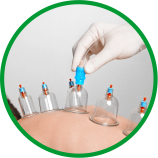
Acupuncture Treatment / Acupuncture Application
Acupuncture is a traditional and complementary health method based on the controlled application of very fine needles to specific points on the body. In Pearl Therapy, the treatment plan is developed face-to-face after evaluating the purpose, suitability, and individual needs.
A practice spanning thousands of years of tradition to modern clinical research.
Acupuncture is a method with a long history in traditional Chinese medicine and is now used as a complementary health practice in many countries. Modern research has focused particularly on its effects on chronic pain, certain headaches, musculoskeletal complaints, and specific cases of nausea and vomiting.
At Pearl Therapy, acupuncture is not presented as "the only method that cures every disease." Suitability and a treatment plan are determined by evaluating the individual's expectations, goals, health information, and the specific areas where they seek support.
Offer:
To allow you to try acupuncture treatment, we will schedule your first appointment for a while. Extra Discount You can create.
Information:
Before the procedure, your needs, the purpose of the treatment, and the suitability of acupuncture for you will be assessed; the same points and treatment plan are not used for everyone.
Meeting:
Acupuncture is a physical practice and can be performed at a qualified Pearl Therapy center. face to face This is done. You can obtain current center and availability information from customer service.
Contact Us Now:
During the initial consultation, your needs and suitability for the procedure will be assessed, and you will be informed about the most appropriate acupuncture plan for you.
What is acupuncture?
Acupuncture is a practice in which very thin needles are inserted into selected points on the body at specific depths and angles. While traditional Chinese medicine explains these points using the concepts of meridians and energy flow, modern biomedical research explores different explanations involving the nervous system, pain processing, local tissue response, and neurochemical mechanisms.
Acupuncture is not limited to a single standard practice. There are various methods, including manual acupuncture, electroacupuncture, ear acupuncture, and different point selection systems. In Pearl Therapy, the type of application and points used are determined according to the individual's needs and the practitioner's assessment.
How is it explained how acupuncture works?
The traditional explanation of acupuncture is not the same as the modern scientific explanation. While the traditional approach emphasizes the regulation of energy flow, modern research focuses specifically on the nervous system and pain modulation.
Nervous System Response
Researchers are investigating whether needle stimulation affects pain processing mechanisms by sending signals from peripheral nerves to the central nervous system.
Local Tissue Response
The relationship between mechanical and biochemical responses at the injection site and local sensitivity and circulation is investigated.
Endogenous Pain Control
The body's own pain regulation systems, endogenous opioids, and neurotransmitters are among the mechanisms studied in acupuncture research.
Expectation and Context Effects
Results from sham acupuncture studies suggest that non-specific influences such as context of application and expectation may also play a role in part of the overall response.
How is acupuncture applied?
1. Preliminary Assessment
The purpose of the evaluation is to assess your current symptoms, medications you are taking, and any health information that may affect the treatment.
2. Point Selection
Acupuncture points are determined according to the individual, the purpose of the treatment, and the approach used; the same points are not used for everyone.
3. Sterile Needle Application
Disposable sterile acupuncture needles are inserted into selected points using the appropriate technique.
4. Controlled Stimulation
When appropriate, the needles can be gently stimulated manually; in some applications, different methods such as electroacupuncture may be considered.
5. Waiting Time
The needles are left in the area for a specific period of time according to the application plan. The aim is not to create unnecessary pain or excessive stimulation.
6. Removing and Checking the Needles
The needles are removed safely, the injection sites are checked, and post-injection precautions are explained.
In which areas has acupuncture been scientifically researched?
While acupuncture can be promoted for a very wide range of ailments, scientific evidence is not equal across all areas. Some of the most researched areas include:
Chronic Pain
There are numerous randomized trials and meta-analyses of individual patient data on conditions such as lower back, neck, shoulder pain, osteoarthritis, and chronic headaches.
Migraine
Randomized studies have been conducted comparing sham, conventional care, or preventive medication to the frequency and severity of migraine attacks.
Tension Type Headache
Prophylactic acupuncture for frequent episodic or chronic tension-type headaches has been evaluated in systematic reviews, including Cochrane.
Knee Osteoarthritis
Numerous studies exist regarding pain and function; however, effect size and quality of evidence in sham comparisons can vary from study to study.
Back and Neck Pain
Pain intensity, function, and quality of life outcomes have been investigated, particularly in chronic nonspecific low back pain and cervical pain.
Nausea and Vomiting
Acupuncture or acupuncture point stimulation has been investigated as a supportive method in certain clinical conditions, particularly in chemotherapy-related nausea and vomiting.
Important: Just because a condition has been studied with acupuncture does not mean it will be effective for everyone or that it should replace standard medical evaluation and treatment.
Acupuncture and a Holistic Approach in Pearl Therapy
At Pearl Therapy, acupuncture is not considered a "miracle cure" on its own, independent of all of an individual's health needs. The aim of the treatment is to address existing complaints, stress, sleep, exercise, lifestyle, and other physical or psychological factors as needed.
The goal, therefore, is to use the appropriate supportive method for the individual for the right purpose, avoiding unnecessary, excessive, or a one-size-fits-all approach.
Client Comments
Acupuncture Appointment and Treatment Process
Appointment
Please contact customer service to confirm availability at the appropriate Pearl Therapy center.
Conformity Assessment
Health information, medications, purpose of treatment, and specific risk factors are evaluated.
Personalized Point Plan
Application points, needle count, and session structure are determined on an individual basis.
Hygienic Practice
Disposable sterile needles and proper hygiene procedures are used.
Post-Application Inspection
The injection sites are checked; information is provided about possible effects such as short-term tenderness or minor bleeding.
Follow-up Plan
If a repeat application is required, it will be evaluated based on the objective and the response to the previous application, not on a standard number.
What can be felt after acupuncture?
The experience after acupuncture can vary from person to person. Some people feel relaxation or mild fatigue, while short-term sensitivity may be experienced at the injection site.
- There may be temporary tenderness or pain at the injection site.
- Minor pinpoint bleeding or bruising may occur.
- Some people may experience temporary dizziness or fatigue.
- Severe pain, shortness of breath, obvious signs of infection, or unexpected serious complaints should not be considered normal.
Who might not be suitable for acupuncture?
Although acupuncture can be applied to most people without causing serious problems, it is not automatically suitable for everyone. Special circumstances such as bleeding tendency, use of blood thinners, active skin infection, certain conditions affecting the immune system, and pregnancy should be reported before the procedure. If electroacupuncture is planned, pacemakers or similar electronic implants should also be evaluated.
Why Pearl Therapy for Acupuncture?
Personalized Assessment
Instead of applying the same treatment to everyone at the same location and in the same session, the goal of the treatment and the individual's situation are evaluated.
Holistic Approach
Acupuncture is not presented as a standalone solution, independent of a person's overall health and lifestyle.
Hygiene and Sterile Materials
The injection procedure is planned according to the principles of hygienic conditions and the use of single-use sterile materials.
Realistic Information
Areas where scientific evidence is strong and areas where it is limited should not be confused; claims of guarantees or miracles should not be used.
Conformity Check
The risk of bleeding, skin condition, pregnancy, and other specific circumstances are assessed before the procedure.
Follow-up as Needed
The number of sessions is not determined automatically; it takes into account the individual's goals and post-treatment response.
What do scientific studies show about acupuncture?
Acupuncture is one of the complementary health practices that has been the subject of the most clinical research. However, results vary depending on the disease, the comparison group, the application protocol, and the quality of the study.
Scientific framework: There are findings in favor of acupuncture in some areas of chronic pain and headache; differences versus sham acupuncture are mostly smaller than in conventional care comparisons. The following studies have been selected to illustrate both the strengths and limitations of the scientific literature.
1. 2012 – 29 RCTs and 17.922 people in chronic pain.
A meta-analysis combining individual patient data from high-quality randomized trials evaluated 17.922 individuals with back and neck pain, osteoarthritis, chronic headache, and shoulder pain. Acupuncture was found to be superior in pain outcomes compared to both sham and non-acupuncture control groups; the differences were smaller compared to sham.
2. 2019 – Individual patient data from 20.827 chronic pain patients.
The analysis, using data from 20.827 chronic pain patients across 39 high-quality randomized trials, assessed the impact of patient characteristics on acupuncture response. The results showed that identifying a single 'perfect responder type' is not easy and that response varies from person to person.
3. 2019 – 14 studies and 2.110 participants on lower back pain.
A systematic review of 14 randomized sham/placebo-controlled trials and 2.110 participants in non-specific low back pain found a statistically significant difference in favor of acupuncture in terms of pain after treatment; no clear superiority was demonstrated in terms of function.
4. 2024 – 80 studies and 9.933 participants in knee osteoarthritis.
A systematic review and network meta-analysis of 80 randomized trials and 9.933 participants reported positive effects of acupuncture on pain compared to sham, conventional care, and some other comparisons. However, the certainty of the evidence for these comparisons was considered very low.
5. 2022 – 11 RCTs and 2.484 people with knee osteoarthritis.
A meta-analysis of 11 randomized controlled trials evaluating 2.484 people reported small positive effects in terms of pain and function; no significant difference was shown in stiffness and some quality of life measures compared to sham acupuncture.
Source: Evidence-Based Complementary and Alternative Medicine
6. 2024 – Systematic review of randomized trials for migraine.
A systematic review of randomized controlled trials published up to 2024 investigated the relationship between 'dose' characteristics such as number of sessions, frequency, and duration of application and outcomes in migraine treatment. The study shows that acupuncture has a large randomized trial literature in the field of migraine.
7. 2021 – 20 RCTs and 2.725 patients for migraine.
A review of 20 randomized controlled trials comparing acupuncture and sham acupuncture, evaluating 2.725 patients, reported mean differences in migraine frequency and pain severity in favor of acupuncture. Due to methodological differences between studies, the results are not guaranteed at the individual level.
8. 2016 – Cochrane review on tension-type headache.
A Cochrane review evaluated acupuncture in comparisons to routine care and sham therapy for frequent episodic or chronic tension-type headaches. Benefit was observed in some headache frequency outcomes; the quality of evidence was mostly moderate or low.
9. 2023 – 38 RCTs and 2.503 individuals with chemotherapy-induced nausea and vomiting.
A meta-analysis of 38 randomized trials and 2.503 cancer patients reported that acupuncture, when added to routine care, may improve complete control of acute and delayed vomiting in some analyses. In many other results, no effect was found, and the certainty of the evidence was generally considered low or very low.
10. 2021 – Acupuncture safety: 21 prospective studies
A systematic review of 21 prospective studies indicated that serious side effects were rare, with the most frequently reported minor effects being bleeding, pain, or transient reactions at the needle site. Education, anatomical knowledge, sterile equipment, and risk assessment are crucial for safe practice.
Frequently Asked Questions About Acupuncture
1. What is acupuncture?
Acupuncture involves the controlled application of very thin, sterile needles to specific points on the body. Although traditional and modern explanations differ, the method is currently being researched in various clinical fields.
2. Does acupuncture hurt?
The needles are very thin, and in most applications, a brief pricking, pressure, or other sensation may be felt. The aim is not to create unbearable pain; if significant pain occurs, the practitioner should be informed.
3. In which health problems has acupuncture been studied?
Some of the broadest areas of research include chronic lower back and neck pain, osteoarthritis, migraine, tension headaches, and some nausea and vomiting conditions. The strength of the evidence is not the same for every condition.
4. Can acupuncture replace medication or medical treatment?
Not always. In many cases, acupuncture is used as a complementary approach and does not automatically replace necessary medical diagnosis, treatment, or medication.
5. How many sessions are needed?
The purpose of the treatment, the duration of the complaint, the individual's response, and the protocol used vary. Therefore, it is not accurate to give everyone the same exact number of sessions.
6. Are there any side effects of acupuncture?
The most commonly reported effects are minor bleeding, bruising, pain at the injection site, and temporary discomfort. Serious complications are rare, but sterile technique and accurate anatomical knowledge are important for safety.
7. Can acupuncture be done during pregnancy?
Not all aspects and procedures are evaluated the same way during pregnancy. Pregnancy or the possibility of pregnancy must be disclosed before any procedure.
8. Can I have acupuncture if I'm taking blood thinners?
Information regarding medications and dosages used should be shared prior to the procedure to assess the risk of bleeding and bruising. Suitability is determined based on an individual risk assessment.
9. Can acupuncture be done online?
No. Acupuncture requires physical needle application and is performed in person. Online communication is only for information and appointments.
10. Has the effectiveness of acupuncture been scientifically proven?
There are thousands of clinical studies on acupuncture, and some have found positive results in the areas of chronic pain and headaches. However, the magnitude of the effect and the certainty of the evidence vary depending on the indication; there is no equal level of evidence for all diseases.
Offer:
To allow you to try acupuncture treatment, we will schedule your first appointment for a while. Extra Discount You can create.
Information:
Before the procedure, a personalized plan will be created based on an assessment of your needs, health information, and suitability.
Meeting:
Since acupuncture is a physical practice, it should be performed at a suitable Pearl Therapy center. face to face is performed.
Contact Us Now:
To learn more about acupuncture, find a center that suits you best, and schedule your first appointment with an extra discount, please contact our customer service.
Related Pearl Therapy Services
Explore Pearl Therapy's service approach.
Dry Cupping Therapy
Learn about dry cupping, which is performed using negative pressure without cutting the skin.
Leech Therapy
Check out Pearl Therapy's leech therapy service page.
Cupping Therapy / Wet Cupping
Learn about cupping therapy.
Making an Appointment
Find out about current center and appointment options.
Client Comments
Examine real client experiences.
Face-to-Face Acupuncture Service
Acupuncture requires physical application and therefore cannot be performed online. You can find out about current in-person center, specialist, and availability options on the Pearl Therapy appointment page or via WhatsApp customer service.
Frequently Searched Terms on This Topic
What is acupuncture, how is acupuncture performed, acupuncture treatment, acupuncture therapy, benefits of acupuncture, does acupuncture hurt, how many acupuncture sessions, acupuncture for back pain, acupuncture for neck pain, acupuncture for migraine, acupuncture for knee pain, side effects of acupuncture, acupuncture center, acupuncture appointment, acupuncture treatment