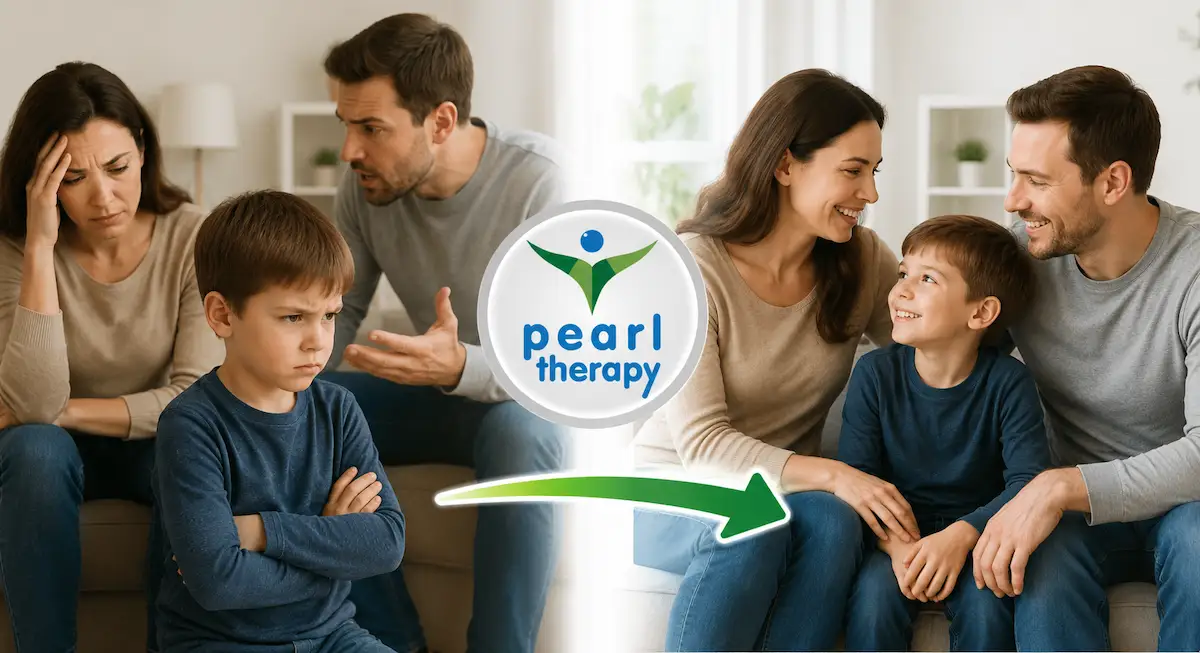
Marriage Therapy and Couple Counseling
Are you discussing the same problems over and over again but still can't find a solution?
Constant arguments, communication breakdowns, mistrust, resentment, or emotional distance can wear down a marriage over time.
Pearl Therapy doesn't just focus on the most recent argument. It holistically evaluates all aspects that fuel the problem, including communication styles, emotions, behaviors, past experiences, and recurring cycles between partners.
It's not enough to just suppress the problem in your marriage; you need to address its root causes.
Sometimes the apparent subject of an argument might be money, families, children, or phones. But often, beneath the same argument lies a deeper cycle of communication and emotions.
In the first session, the root causes of the problem are identified. Then, a roadmap is created according to the couple's needs, and the solution process begins.
Offer:
You can schedule your first marriage and couples therapy appointment at an extra discount to address recurring problems in your marriage before they escalate.
Information:
In the first session, the problems you are experiencing, when they started, the situations in which they worsen, and the recurring relationship cycle between partners will be evaluated. A therapy plan tailored to your needs will be created.
Meeting:
You can have a face-to-face meeting or, if your situation allows, participate via online video call. Whether the meeting will be a couples session or one-on-one if needed will be determined according to necessity.
Contact Us Now:
Don't wait to relive those same arguments. Start the resolution process now to restore communication, trust, and intimacy in your marriage.
What is marriage therapy?
Marriage therapy is a professional counseling process that addresses relationship problems without taking sides.
The goal isn't simply to find out who is right. It's about considering how the problem arose, why it recurs, and what needs to change at home.
Re-understanding Each Other
Just as important as what the spouses say is how they feel and what they need.
Seeing the Communication Cycle
Recurring patterns are identified, such as accusation, defense, silence, withdrawal, or persistent argument.
Rebuilding Trust
If there is mistrust, resentment, or a loyalty issue, the areas where trust has been damaged are assessed.
Applying it to Daily Life
The topics discussed during the session are transformed into concrete steps that can be applied in daily life.
What issues are addressed in marriage and couples therapy?
Marriage therapy isn't just for couples on the verge of divorce. Problems that strain a relationship can be addressed early on.
Communication Problems
- Inability to speak or constant misunderstandings
- Shouting, blaming, and hurtful language.
- When one spouse is talking, the other completely shuts down.
- Discussing the same topics over and over again.
- Inability to express emotions and needs.
Issues of Trust and Loyalty
- Insecurity
- The crisis that follows infidelity.
- Intense jealousy
- Constantly bringing up past events
- Inconsistency between words and actions.
Emotional Distancing
- Not feeling as close as before
- Don't feel lonely even when you're together.
- Feeling that attention and affection have decreased
- Avoiding each other
- Marriage reduced to mere daily responsibilities
Family, Money, and Daily Life
- Families interfering too much in marriage
- Discussions about money and spending.
- Household chores and sharing responsibilities.
- Disagreement over child rearing
- Work overload and lack of time together.
Intimacy and Privacy
- Decreased intimacy between spouses
- Inability to talk about private life
- Feelings of rejection and worthlessness
- Decreased desire for each other
- Resentments accumulated regarding intimacy
Reaching the Point of Separation and Divorce
- Don't always talk about breaking up.
- A spouse wanting to end the relationship
- Long-standing deadlock
- Severe emotional distance at home.
- Indecision about whether to continue the marriage
Why do the same problems keep recurring in marriage?
Most couples know what the problem is. The difficult part is figuring out why they keep falling into the same cycle.
The conversation quickly turns into an argument.
One spouse criticizes, the other becomes defensive. New resentments are added before the issue is resolved.
Old Issues Are Not Closed
Past mistrust or hurt feelings, if not truly resolved, resurface in new arguments.
Accusations are being made instead of addressing the real issue.
Phrases like "You don't understand me" or "You're always like this" make it harder for the real need to be seen.
One partner is approaching, the other is moving away.
One person may insist on talking while the other shuts down. This cycle can lead to both parties feeling more alone.
External factors are straining the relationship.
Work stress, financial pressure, children, family, and daily fatigue can all reduce the space spouses spend with each other.
Past experiences influence present reactions.
A person's past relationships, the family structure they witnessed in childhood, and learned relationship patterns can all be reflected in their current reactions.
Who Should Get Marriage Therapy?
You don't have to wait for a major crisis. Couples who want to improve the health of their relationship can also seek marriage counseling.
- Couples who constantly argue about the same things.
- Spouses who have difficulty listening to and understanding each other.
- Couples experiencing trust or fidelity issues
- Couples who have grown emotionally distant from each other
- Couples who frequently clash over family, money, or children.
- Couples who feel intimacy has decreased
- Couples who are considering separation or divorce
- Couples whose marriage is going well and who want to further strengthen their relationship.
Coming to therapy doesn't mean the marriage is over. On the contrary, it's a step towards understanding and fixing the relationship before problems escalate.
How does Pearl Therapy address marital problems?
In Pearl Therapy, marital problems are not simply dismissed with the phrase "we can't communicate." The underlying causes that are straining the relationship are evaluated together.
The relationship cycle is identified.
The process of how the argument began, what words or actions escalated it, and how it ended are clarified.
Both sides are heard.
The aim is not to blame one side. The situation, feelings, and expectations of both spouses are understandable.
The root causes are examined.
Communication, trust, resentment, learned relationship patterns, and past experiences are all evaluated depending on the context.
The method is chosen according to the person and the problem.
Not every couple benefits from the same approach. Counseling, relationship work, and, if needed, individual subconscious-based work can be planned together.
When necessary, the Subconscious-Based Holistic Master Therapy (HMT) approach is also used. The aim here is not to present a single method as a miracle cure, but to use appropriate methods together, depending on the individual and the problem.
Marriage and Couple Therapy Client Testimonials
Seeing other clients' experiences before receiving services is reassuring. You can review genuine and authorized testimonials about Pearl Therapy.
What happens during the first session of marriage therapy?
The root causes of the problem are identified in the first session. The goal is not to solve everything at once in the first meeting, but to accurately map out the problem.
1. The problem is listened to.
The couple's biggest challenges and the circumstances that led them to schedule this appointment today are discussed.
2. The Repeating Cycle is Identified
The discussions are analyzed to understand how they started, how they escalated, and what happened afterward.
3. The Main Causes are Identified
Trust, communication, emotional connection, past resentments, family influences, and personal burdens are addressed depending on the context.
4. A roadmap is created.
The topics to be covered and the order in which they will be studied are determined according to the couple's needs.
How does the marriage therapy process work?
Every marriage is different. Therefore, the same number of sessions or the same treatment plan cannot be applied to everyone.
- Evaluation: The main problems in the marriage and the recurring relationship cycle are clarified.
- Goal setting: It is made clear what the partners want to change in the relationship.
- Work process: Communication, trust, resentment, boundaries, intimacy, or other subject-specific areas are addressed.
- Application to daily life: The new approach agreed upon during the session will be implemented at home.
- Follow-up: The areas where change has occurred and the issues that persist are evaluated.
Sometimes couples therapy is sufficient. Sometimes, intense emotional baggage from the past or individual issues affecting the relationship on the part of one partner are also addressed. The process is tailored to the specific needs.
Online Marriage Therapy or In-Person Session?
Either type of consultation can be used depending on the couple's situation. The important thing is that you can attend the consultations regularly and create a suitable environment where you can talk.
Online Marriage Therapy
You can participate via video call from different countries around the world. This is an easy option, especially for couples living abroad who need Turkish language support.
Face-to-Face Marriage Therapy
You can visit our centers for in-person consultations as a couple. When scheduling an appointment, please specify your country and city.
One-on-One Meetings
In our current practice, one-on-one sessions are scheduled with female specialists for female clients and male specialists for male clients.
Participation as a Couple
In marriage and couples therapy sessions, the participation of both spouses makes it easier to see the relationship cycle together. Individual sessions are also assessed as needed.
What changes are aimed to be achieved during the marriage therapy process?
Therapy isn't about transforming your partner into the person you want them to be. The goal is to establish a new order within the relationship where both partners can behave in a healthier way.
More Open Communication
The goal is to express feelings and needs without resorting to aggression, silence, or belittling the other party.
Healthier Conflict Management
When a conflict arises, instead of falling into the same destructive cycle, the focus is on developing the ability to discuss the problem.
Strengthening Trust
If trust has been broken, it is clarified which behaviors will rebuild that trust.
Increased Emotional Intimacy
The goal is for partners to hear and understand each other again, and to feel more visible in the relationship.
Net Limits
The discussion focuses on couples establishing boundaries regarding family, friends, phone calls, work, and personal space.
Finding Common Ground
The couple discusses their expectations from marriage, their shared goals, and the kind of life they want to build together.
What do scientific studies say about marriage and couples therapy?
Couple therapy has been a field of scientific research for many years. The following studies have focused on relationship satisfaction, communication, emotional intimacy, and difficulties experienced by couples.
Important: These studies do not directly test the entire Pearl Therapy HMT system. They demonstrate that couples therapy and various relationship interventions have been researched in the scientific literature. The following “Emotionally Focused Couple Therapy” studies also do not use the same EFT technique as in Pearl Therapy.
2025 – Couple Interventions in Marital Problems
Scope: 12 studies.
Conclusion: In the systematic review and meta-analysis, couples interventions were found to be associated with significantly better outcomes compared to control groups. Signs of interstudy divergence and publication bias were also reported.
Source: Iranian Journal of Public Health / PubMed
2023 – Real-Life Couple Therapy Studies
Scope: 48 non-randomized clinical trials.
Conclusion: The meta-analysis reported significant improvements in both association and individual outcomes compared to pre-treatment levels. Results varied between studies.
Source: Family Process / PubMed
2022 – A Decade-Long Review of Evidence-Based Couples Therapy
Scope: 37 studies published between 2010 and 2019.
Conclusion: Behavioral, cognitive behavioral, emotion-focused, and integrative behavioral couples therapies were evaluated as well-researched approaches for relationship distress.
Source: Journal of Marital and Family Therapy / PubMed
2021 – Marriage Programs, Relationship Satisfaction and Communication
Scope: 12 randomized intervention studies.
Conclusion: Positive outcomes were reported in terms of relationship satisfaction in therapy programs. Improvement was also seen in some groups in communication programs; the differences between studies were significant.
Source: Systematic Reviews / PubMed
2020 – A Comprehensive Meta-Analysis of Couple Therapy
Scope: 58 studies, 40 individual samples, and 2.092 pairs.
Conclusion: Couple therapy was reported to have a significant impact on relationship satisfaction, as well as on communication, emotional intimacy, and partner behavior.
Source: Journal of Consulting and Clinical Psychology / PubMed
2020 – Cognitive Behavioral Couple Therapy
Scope: The meta-analysis included 13 randomized controlled trials.
Conclusion: A moderately significant effect was found in favor of cognitive behavioral couples therapy in relation to relationship difficulties.
Source: Journal of Evidence-Based Social Work / PubMed
2019 – Meta-Analysis of Emotionally Focused and Behavioral Couple Therapy
Scope: 33 randomized controlled trials, a total of 2.730 participants.
Conclusion: Both approaches reported a moderately positive effect on post-treatment relationship satisfaction. It was noted that long-term outcomes were not consistent across all studies.
Source: Journal of Marital and Family Therapy / PubMed
2019 – A Systematic Review of Emotionally Focused Couple Therapy
Scope: Nine randomized controlled trials for post-treatment analysis; four studies for follow-up analysis.
Conclusion: Significant improvement in marital satisfaction was reported, and in some studies, the gains continued during the follow-up period.
Source: Journal of Evidence-Based Social Work / PubMed
2019 – Couple Counseling in Real-Life Practice
Scope: 554 couples across Germany.
Conclusion: In real-world application conditions, some couples experienced improvement in their relationship and individual difficulties. The study also showed that not all couples changed to the same extent.
Source: Family Process / PubMed
2005 – Meta-Analysis of Behavioral Marriage Therapy
Scope: 30 randomized trials.
Conclusion: Behavioral marital therapy was found to be more effective than the control group that did not receive treatment. The researchers also noted the need for caution regarding potential publication bias.
Source: Journal of Consulting and Clinical Psychology / PubMed
Frequently Asked Questions About Marriage Therapy
1. Should I come to marriage therapy with my spouse?
Couple participation makes it easier to assess the relationship cycle together. However, the need for one-on-one meetings may also be considered depending on your situation.
2. What can I do if my spouse doesn't want to come to therapy?
Please specify this when scheduling your appointment. Whether the initial consultation can begin individually will be assessed based on your situation.
3. How many sessions does marriage therapy take?
Every couple has different problems, histories, and needs. Therefore, the same number of sessions is not given to everyone. In the first session, the problem is assessed and a roadmap suitable for you is created.
4. Is it suitable for couples who constantly argue?
Yes. How the argument started, why it escalated, and why the same cycle repeats could be one of the main topics of the study.
5. Is marriage therapy possible after infidelity?
Yes. Loss of trust, hurt feelings, anger, and the future of the relationship are addressed step by step. The goal is not to ignore what happened, but to clarify how to move forward.
6. Is online marriage therapy available?
Yes. You can schedule online marriage and couples therapy appointments via video call from different countries around the world.
7. Can we receive in-person marriage counseling?
Yes. You can schedule an in-person appointment by visiting our centers. Simply provide your country and city information on the appointment form.
8. Does the therapist take sides?
The goal is not to declare who is right. The situation of both sides is listened to, and the cycle that is straining the relationship is addressed impartially.
9. If we've reached the point of divorce, is it too late now?
Every couple's situation is different. Even with deep hurt feelings, the true nature of the problems is assessed first. Afterward, a clearer path is established for how the relationship can move forward.
10. If there aren't any major problems in our marriage, can we still seek counseling?
Yes. Counseling isn't just for crises. Couples who want to strengthen communication, trust, and their shared living arrangements can also seek help.
Why Pearl Therapy for Marriage and Couple Therapy?
The problem is viewed holistically.
Not only the last argument, but also the emotions, behaviors, communication, and past experiences that affected the relationship are considered together.
A personalized plan is created.
The same approach is not applied to every couple. The work plan is determined according to the nature of the problem.
Online and In-Person Options
Depending on your location and needs, you can choose between online or in-person consultations.
Turkish Conversation Opportunity
Turkish-speaking couples living abroad can also participate in the process via video call.
Related Pearl Therapy Services
Online Turkish Marriage Therapy
You can schedule online marriage and couples therapy appointments in Turkish from Belgium, Germany, France, the Netherlands, the United Kingdom, Austria, Turkey, and other countries.
Video conferencing allows couples to participate in the process without being tied to a center in the same city. Clients who prefer in-person sessions can specify their preferred center during the appointment.
Don't postpone the problem:
As the same arguments repeat themselves, resentment and distance can grow. Address the root causes of the problem now.
First step:
The first session identifies the main issues, recurring patterns, and priority issues in your relationship.
Interview Option:
You can begin the process with a face-to-face meeting or, if your situation allows, an online video call.
Book your appointment now:
Initiate the resolution process to foster more open communication, stronger trust, and a healthier relationship in your marriage.
Frequently Searched Terms on This Topic
Marriage therapy, marriage counseling, couples therapy, marriage and couples therapy, online marriage therapy, online couples therapy, marriage therapy in Turkish, communication problems between spouses, therapy for couples who constantly argue, post-infidelity marriage therapy, trust issues in marriage, what should I do if I can't get along with my spouse, emotional distance in marriage, counseling to save a marriage, pre-divorce couples therapy, and face-to-face marriage counseling are frequently searched terms in this field.